
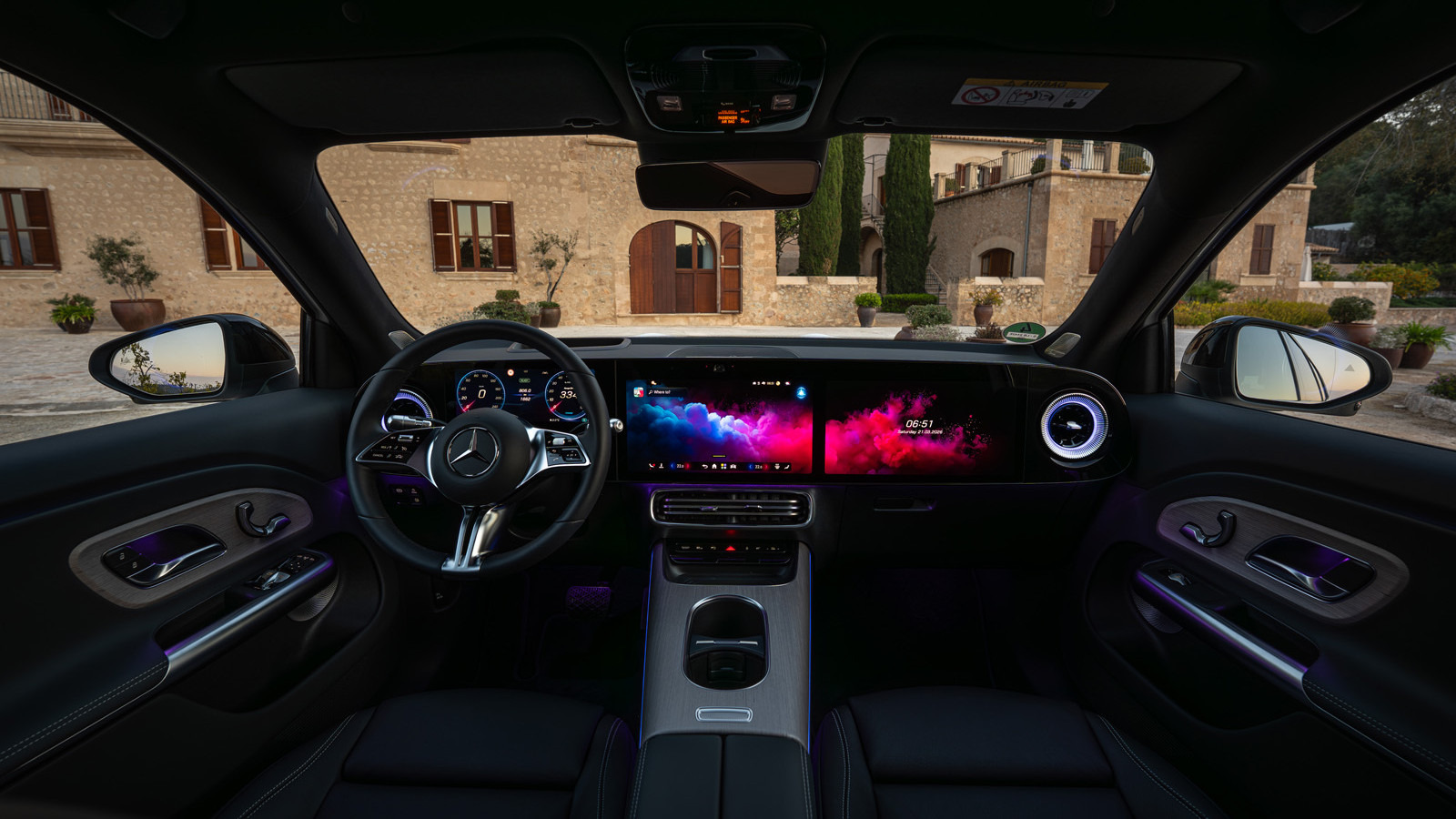
It feels like we’ve been writing this for a long time and as yet to no great avail, but if Mercedes wants to cement a reputation for really distinguishing luxury and quality compared with so many new competitors, it’s high time it refocused its attention away from digital systems and back towards simpler material things.
Mercedes is due to have a busy 2026, since it’s choosing to mark its 140th anniversary year with a new product bonanza the likes of which we haven’t seen from it for some time. A revised S-Class will be part of it, likewise a new, electric AMG GT 4-Door Coupé. Yet even in that company, I suspect the GLB won’t end up looking like the car that has been hurried through to make up the numbers.
It’s impressively practical and better to drive than it probably needs to be, thanks to plenty of performance, slick and intuitive drivability, a smooth, comfortable ride, and fluent, neat handling. Moreover, the dual-motor GLB 350 4Matic is a better invitation to spend a big bigger than cars of its ilk often tend to be, since it hits a standard on efficiency creditably close to that of its single-motor sister.
Big families have had few realistic options for electric transport thus far, counting the expensive, large SUV fare (Volvo EX90, Kia EV9, Hyundai Ioniq 9) and boxy, van-shaped MPVs (Vauxhall Vivaro Life and siblings, Volkswagen ID Buzz). The GLB Electric picks up where the EQB left off in filling the void in between, but does a significantly better job in several key areas.
For those willing to accept less range and performance still, the forthcoming GLB 200 should bring the car's entry price down well below £45,000 ($56,000/€52,000), where it will start to rival cars like the Tesla Model Y Standard Range even more directly, almost bundling its seven-seat practicality as a bonus.
We've yet to test Peugeot's long-range (97kWh) e-5008, but experience of the standard-range model suggests that it's not as efficient as this Mercedes in typical motorway running, so it might not turn out to be the rangier option, despite what the WLTP lab test results suggest.
Thanks to the GLB's simple manual regen controls, you feel like you can maximise the car’s efficiency quite easily – although it helps, quite clearly, that it has the right kind of motor, inverter and body design to be efficient in the first place.
Our testing suggested that a real-world range of 442-483 km (275-300 miles) would be possible from the GLB 350 4Matic and 483-523 km (300-325 miles) from the GLB 250+. That's a little way short of what an iX3 might give you, but then that's not a seven-seater.
They deliver a car with some configurability to its character, which is a bit more level and contained in Sport mode and a bit more supple and absorbent in Comfort mode.
But, refreshingly, it doesn’t feel all that particular about being in the right drive mode for any given road or situation. It just rides and handles assuredly well.
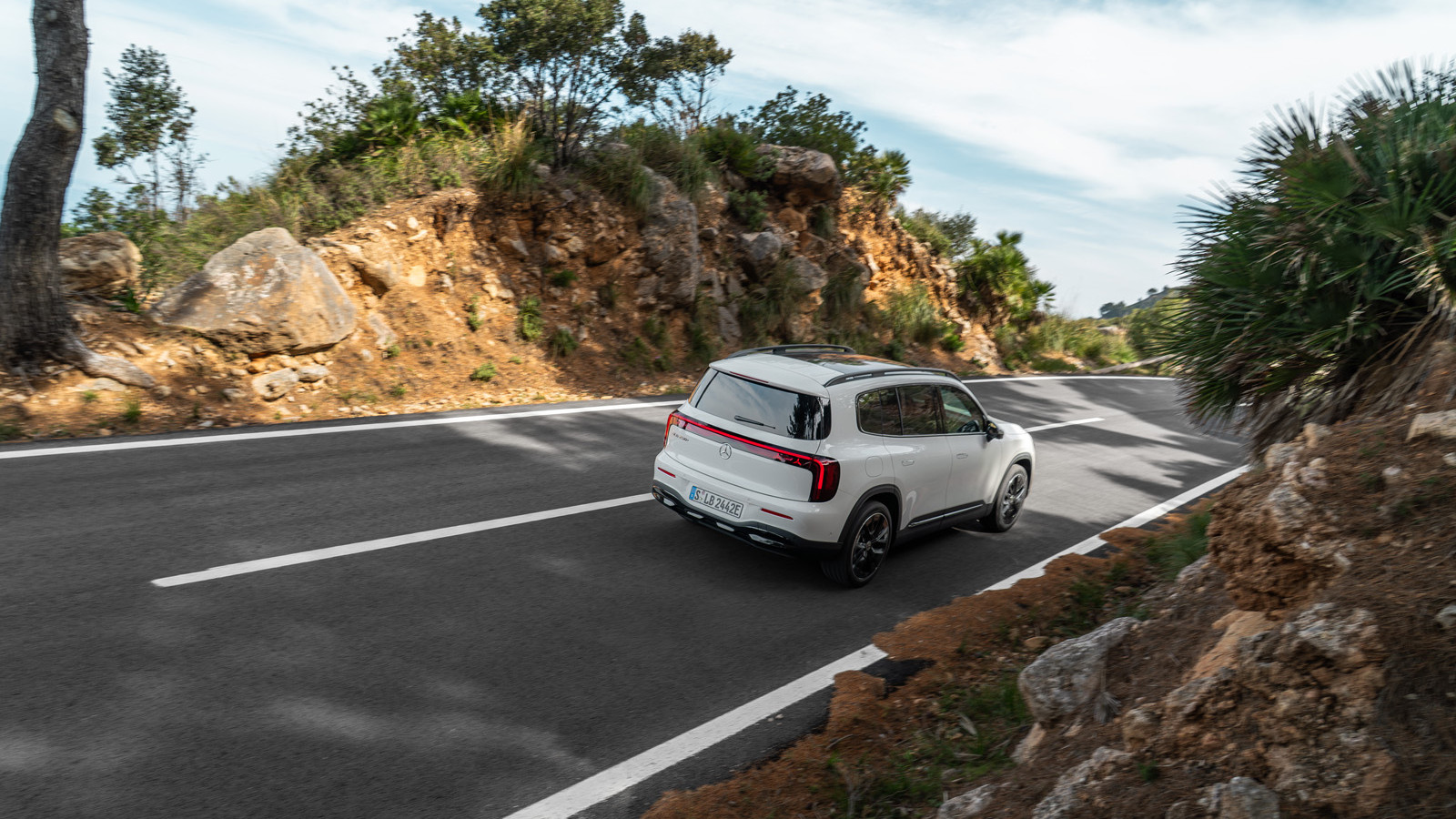
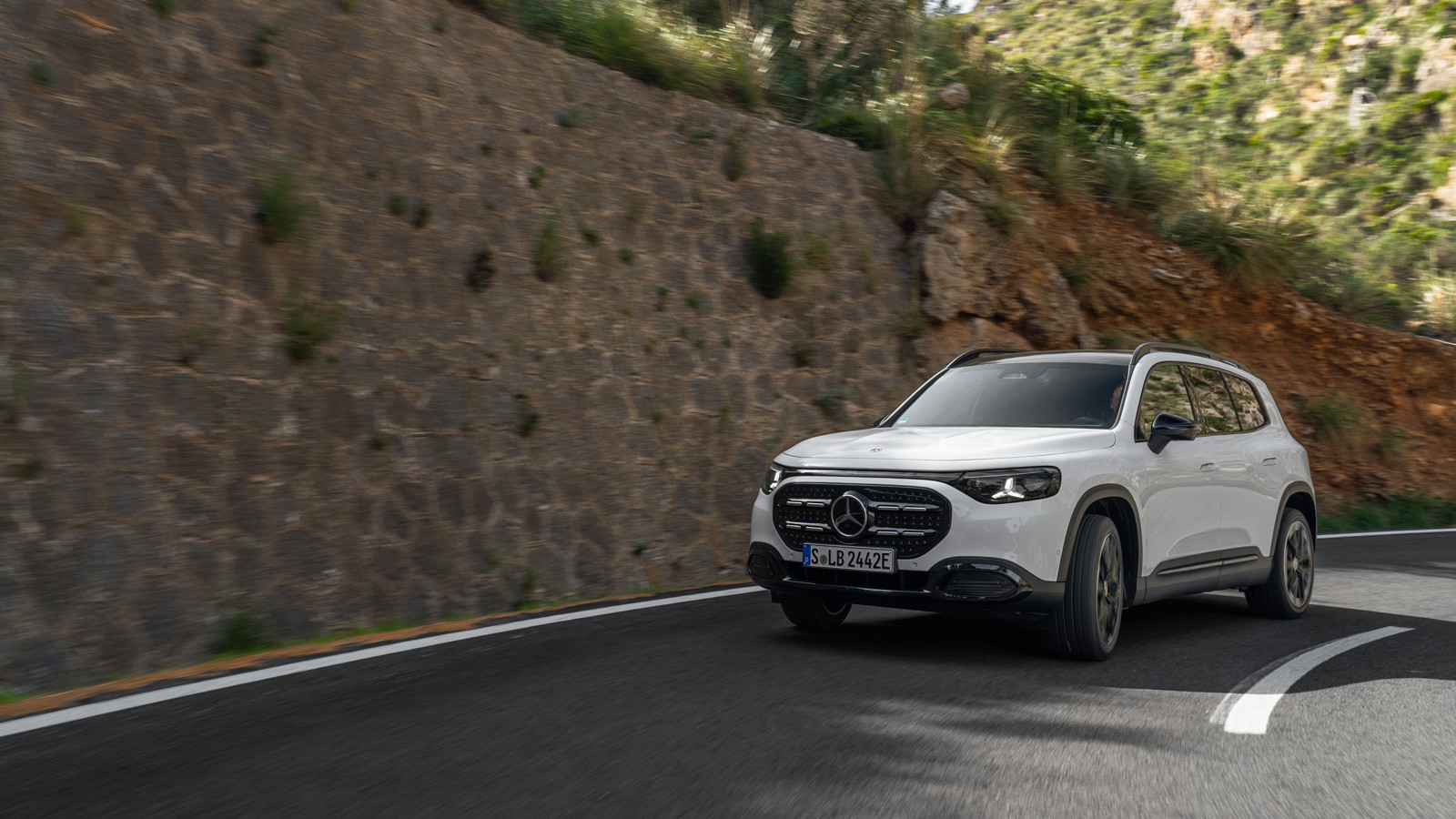
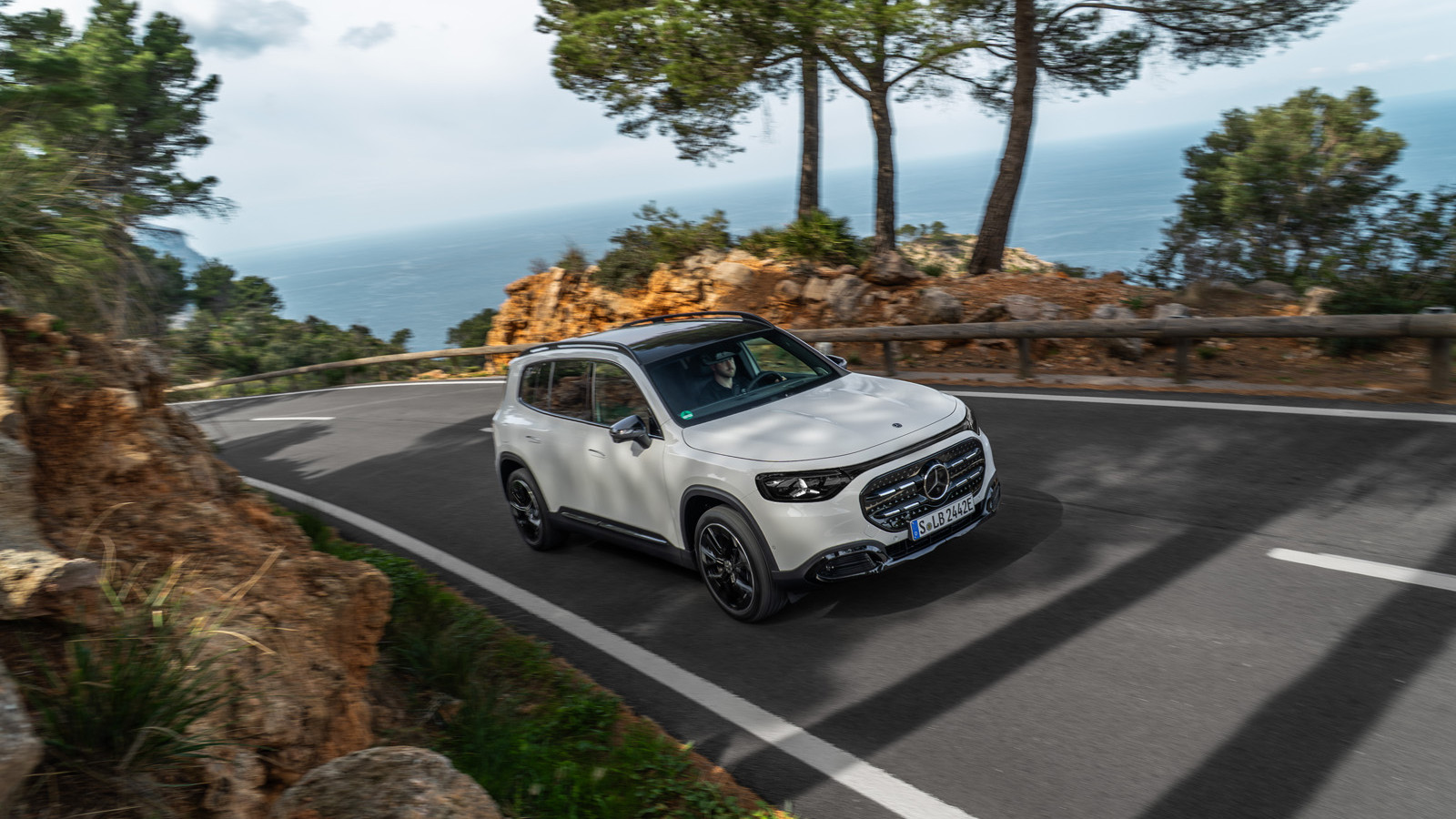
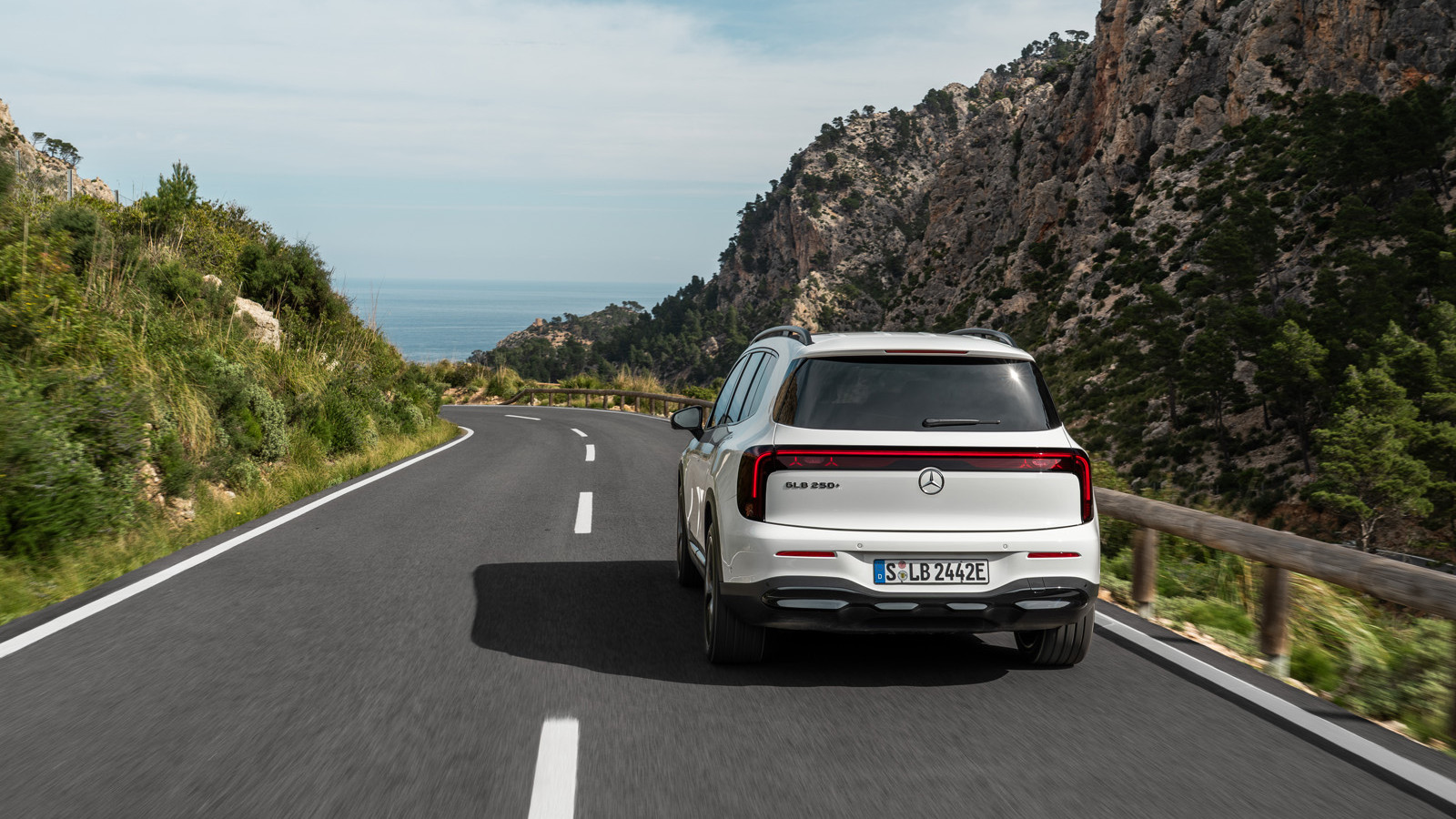
The GLB may be a 2.2-tonne car, but it manages its bulk quite tidily on a winding mountain road and has a flavour of the related CLA’s polished fluidity about its handling. It rides with a settled, filtered sort of composure and deals with broken and bumpy surfaces well.
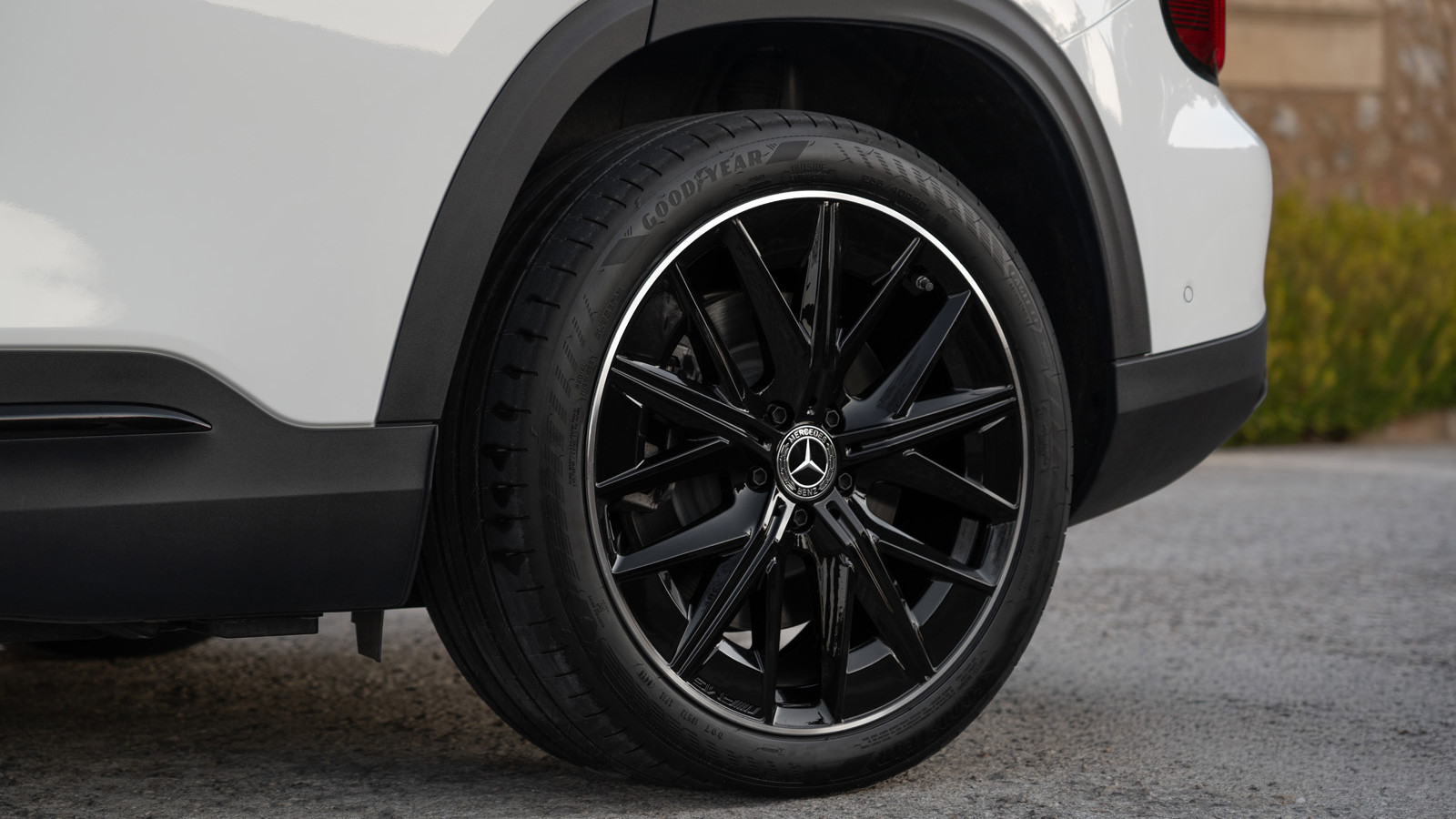
The GLB becomes the only MMA-based car to be available with adaptive dampers. All the test cars on the European launch event had them fitted, but UK buyers will have to spend extra on AMG Line Premium trim and take a car on 20in wheels to get them.
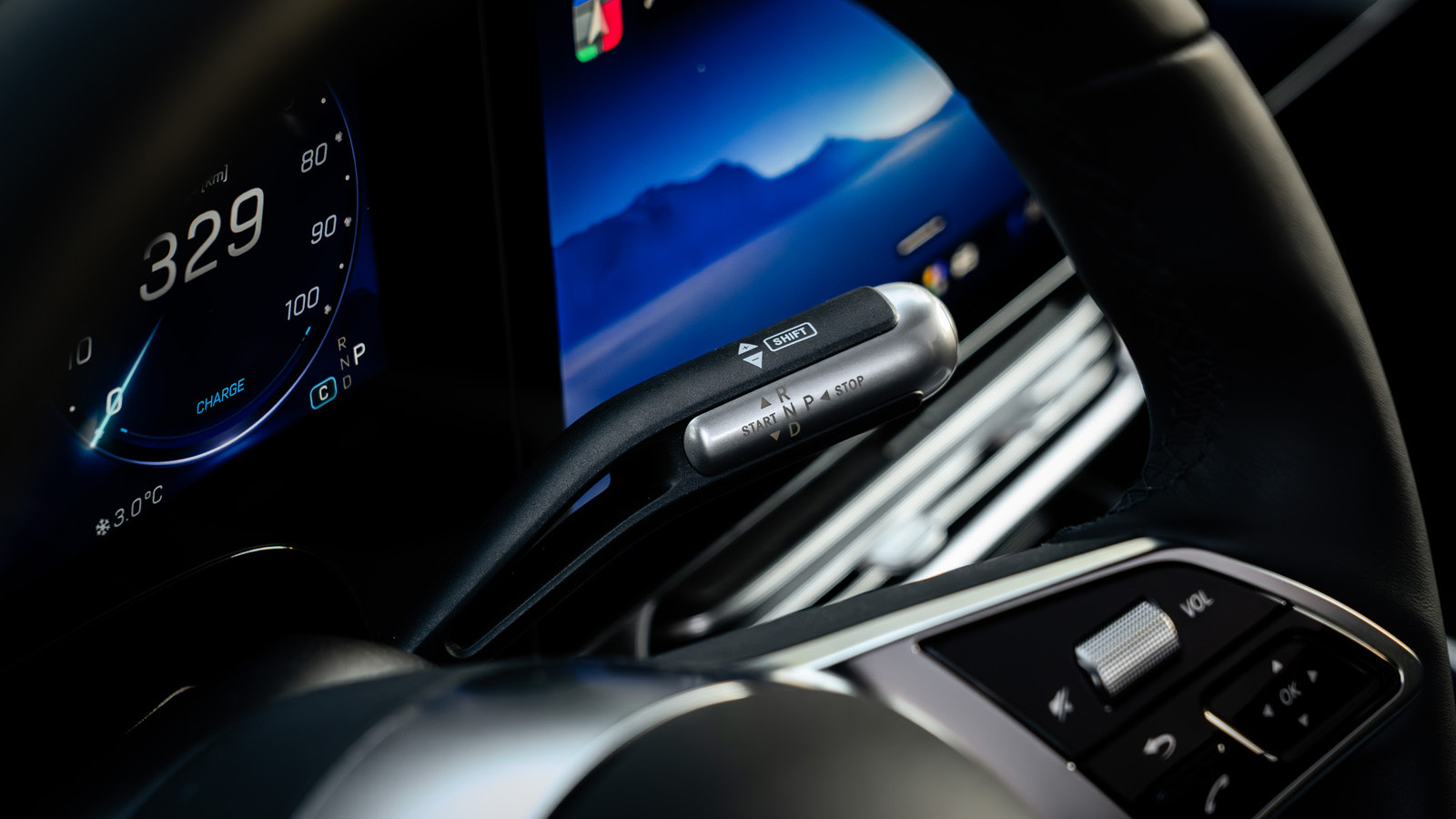
Regen control can be automatic or manual – typically via nudging the drive selector level forwards and backwards in the latter case, although AMG Line models also get shift paddles to accomplish the same thing.
So it’s not difficult to adjust the car’s trailing-throttle characteristics as you drive, to let it coast when the road is open and clear, but check its momentum more at other times.
You wouldn’t feel short-changed by the performance level of the regular single-motor GLB 250+, but neither is there much of an efficiency compromise to be paid if you decide to spend a bit extra on the GLB 350 4Matic.
Mercedes’ extra motor for this car adds less than 50kg and costs less than 16km (10 miles) of WLTP range in some cases (because that motor can disconnect completely from the front wheels when it’s not needed).
The GLB’s driving experience wouldn’t seem to be in such need of refocused priorities. This feels well worthy of a luxury billing.
We tested a single-motor GLB 250+ and a dual-motor GLB 350 4Matic. Both were smooth and quiet, with ample performance; a particularly comfortable and well-isolated ride; neat, fluent and intuitive handling; and all the drivability options you could want in a largish, comfort-first EV.
It has to be considered the most sincere compliment to BMW’s Neue Klasse iX3 that, in the year of its introduction, arch rival Mercedes has taken the trouble to surround it with not one but two fresh competitors.
While the Mercedes GLC counts as the iX3's closer rival, there is another that bigger families should consider: the Mercedes GLB Electric.
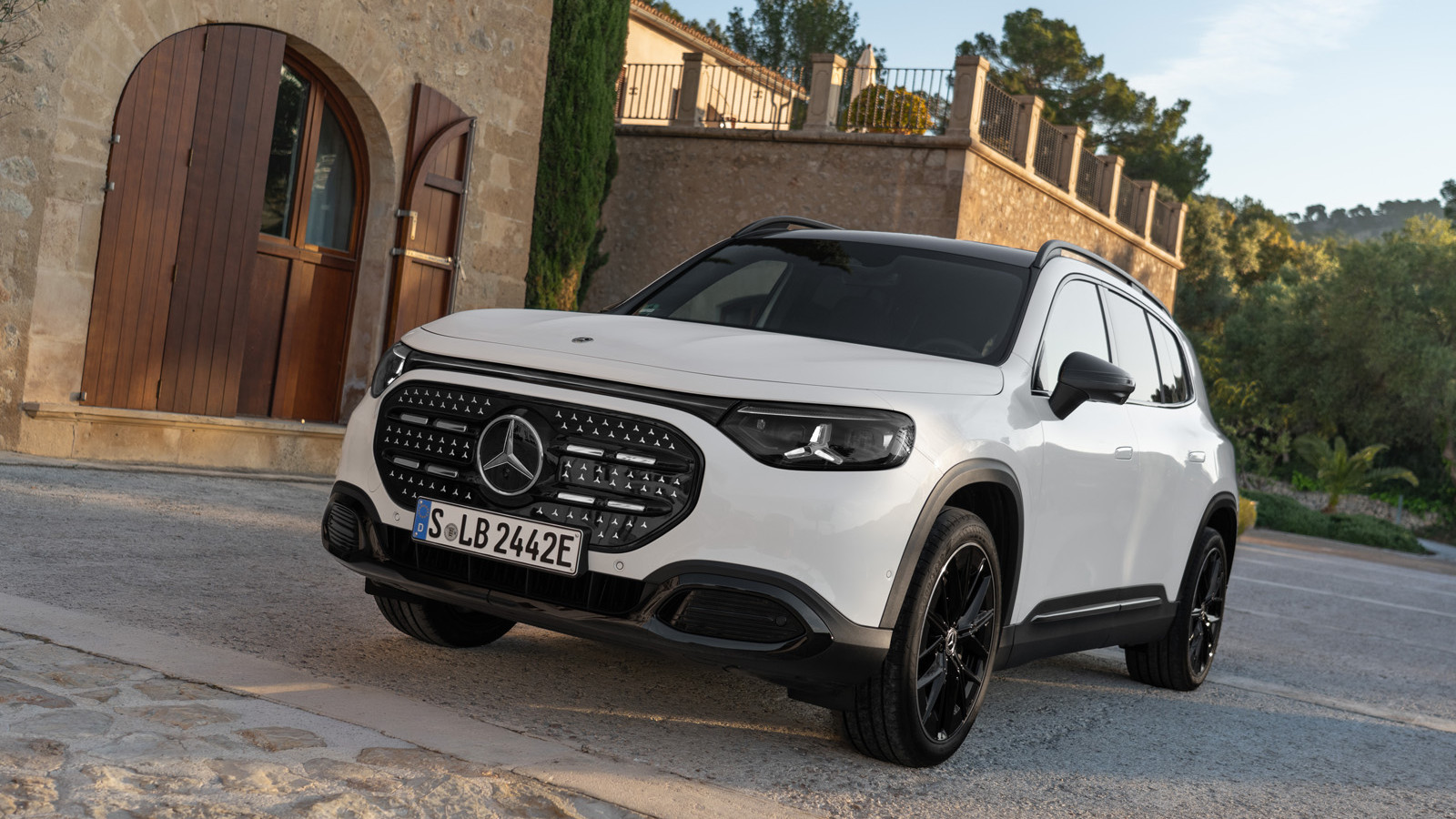
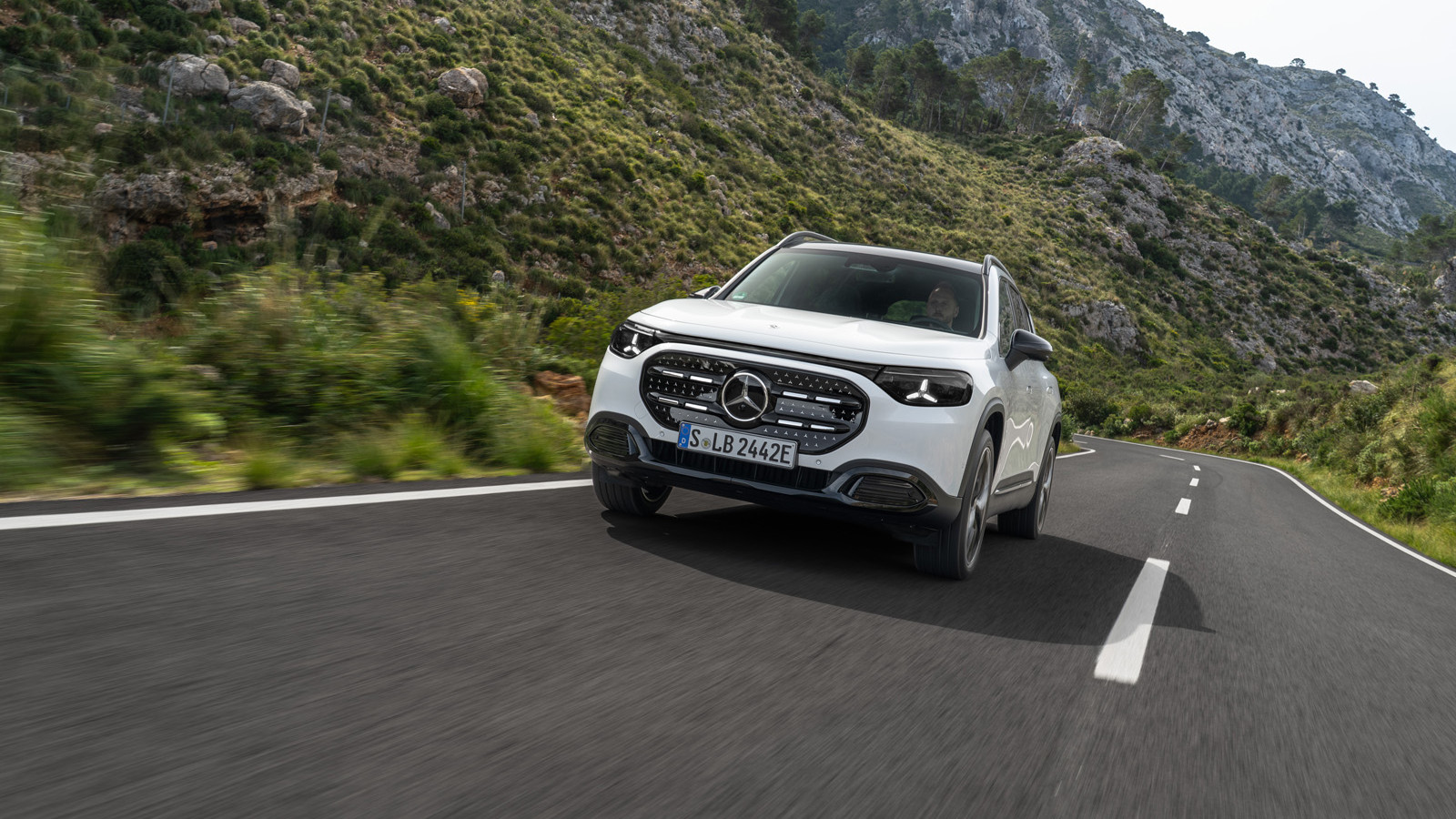
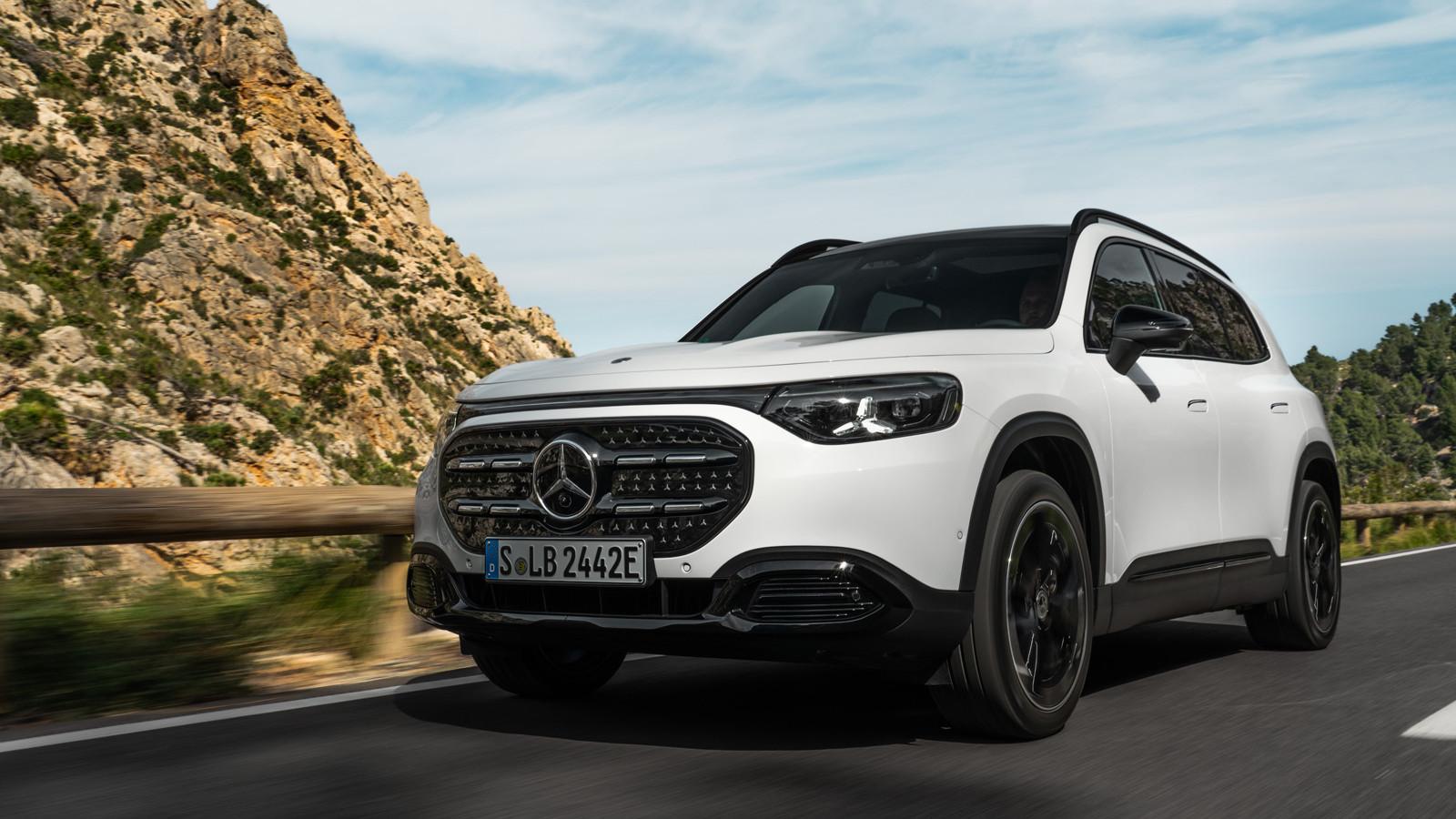
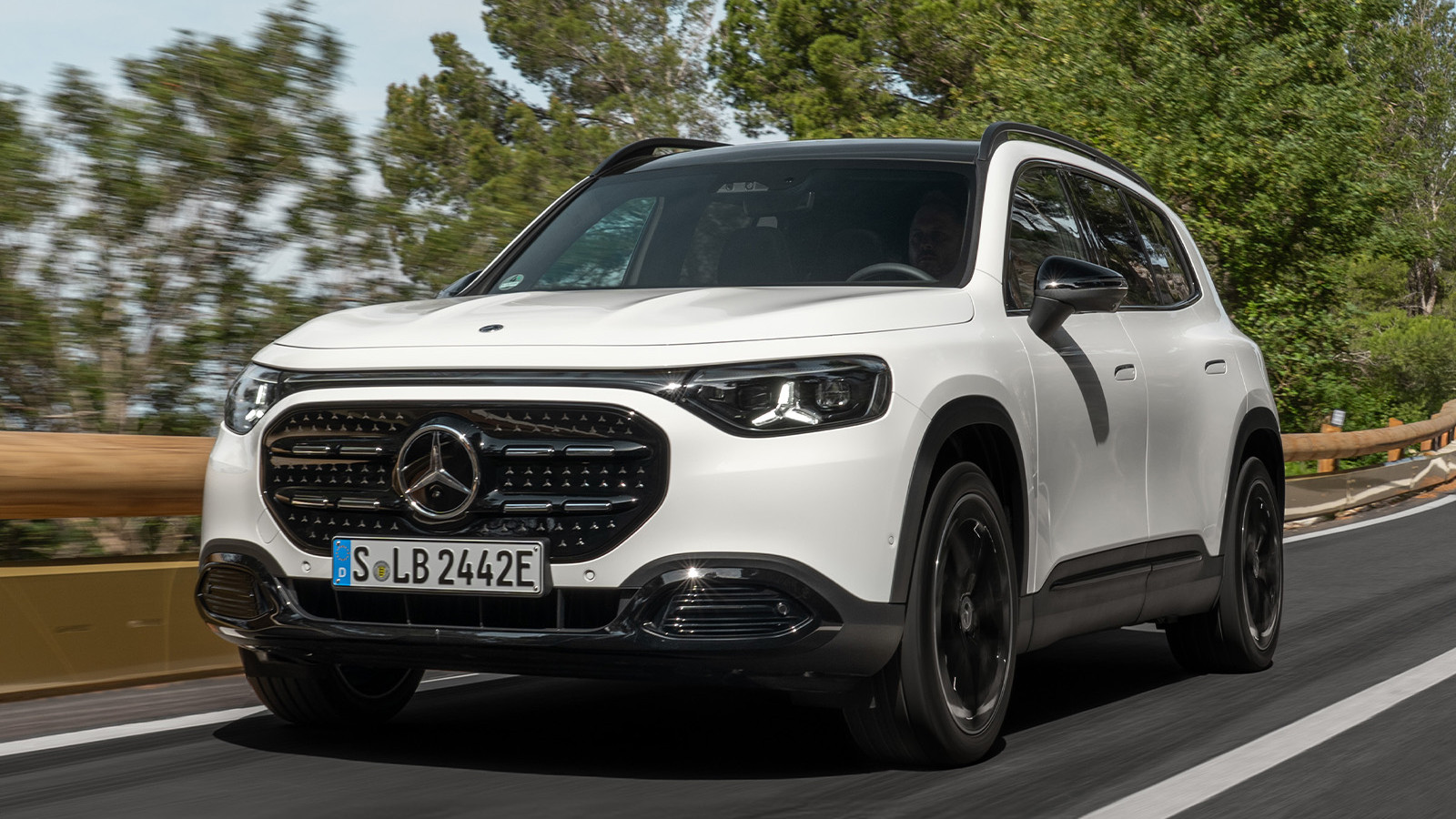
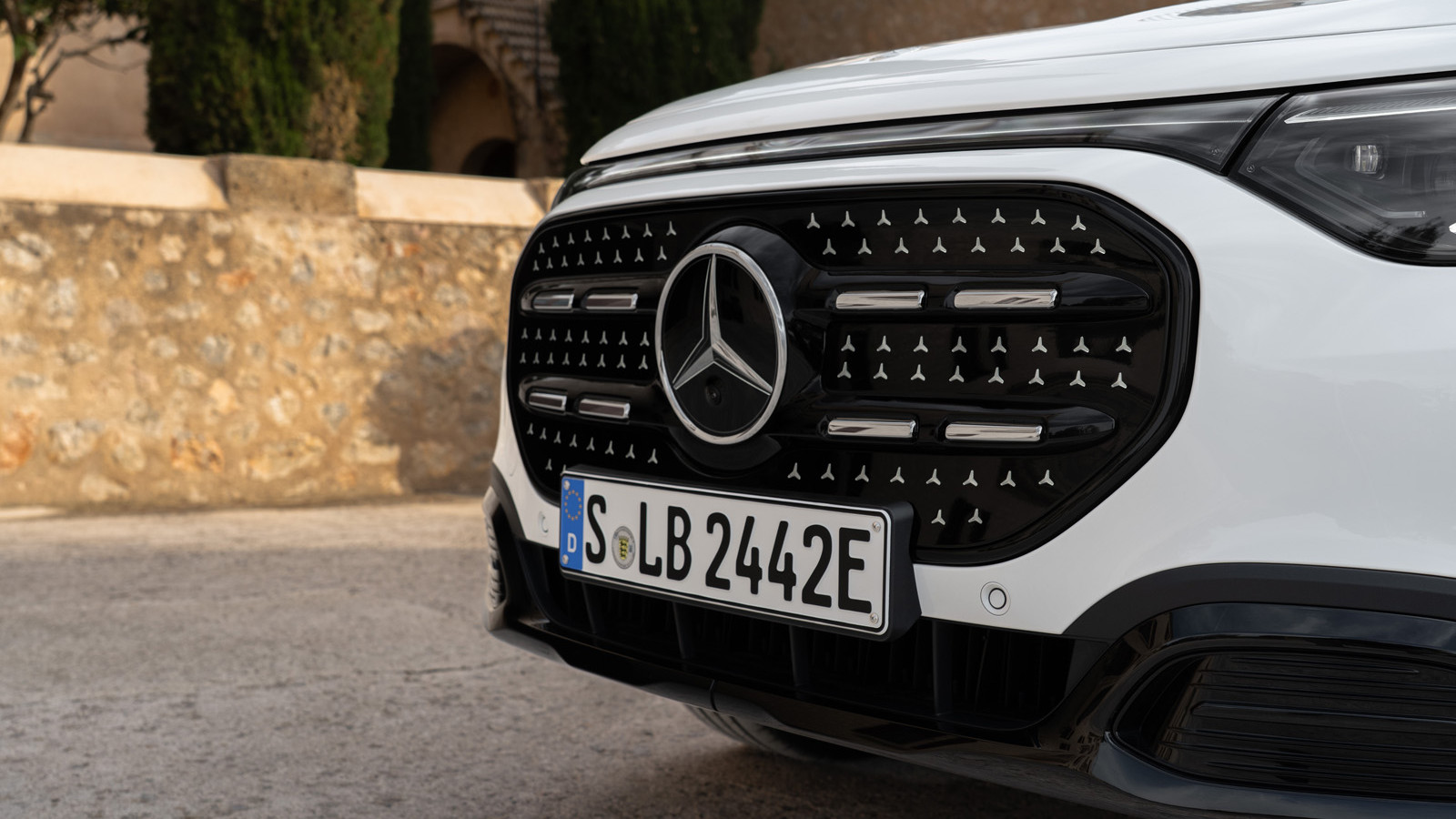
Built on a different platform from the GLC, the GLB is defined by its chromey ‘grille’, ready to dazzle in an entirely different way - with less reflective metalwork and more actual illumination, if you like that sort of thing.
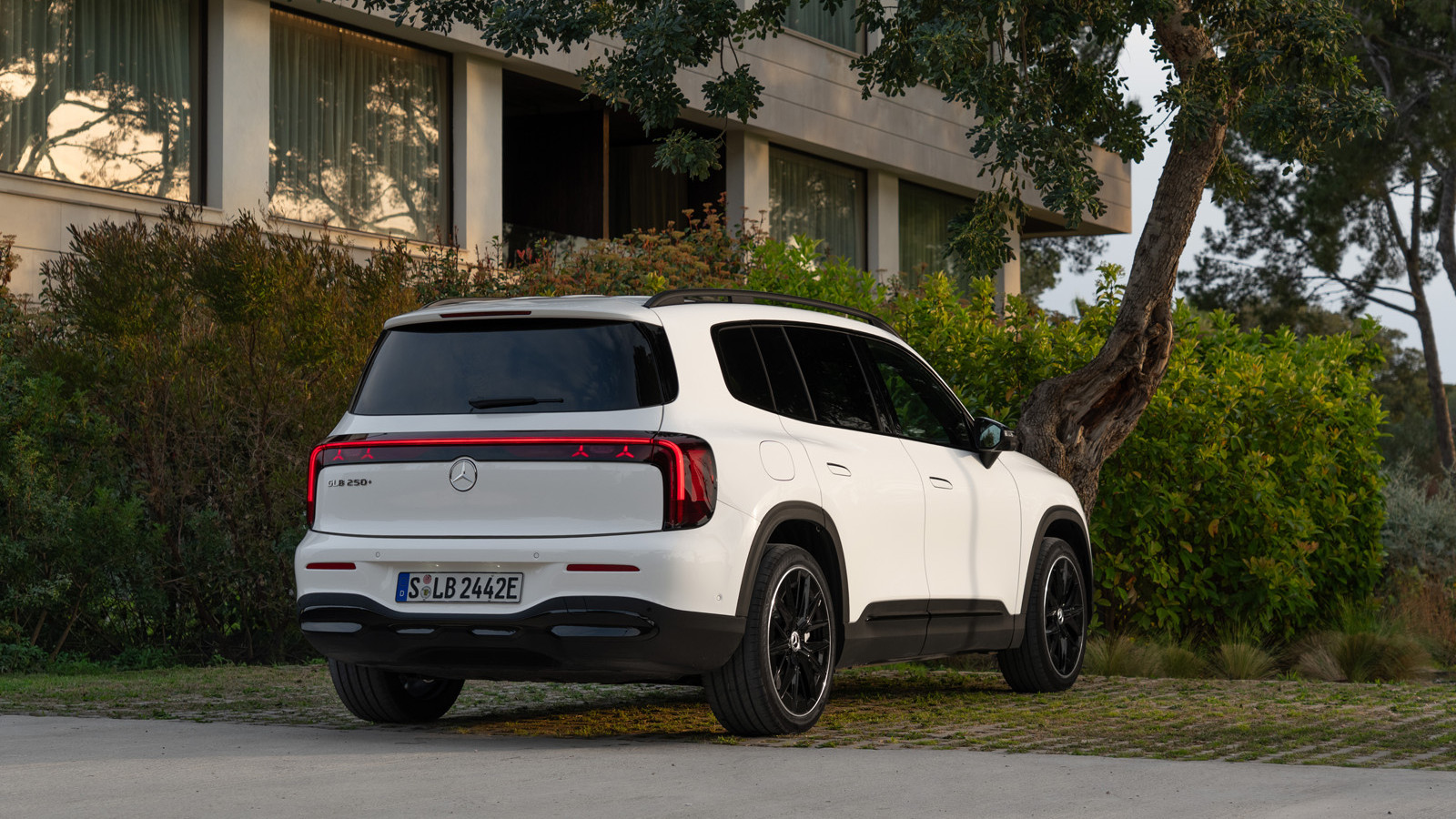
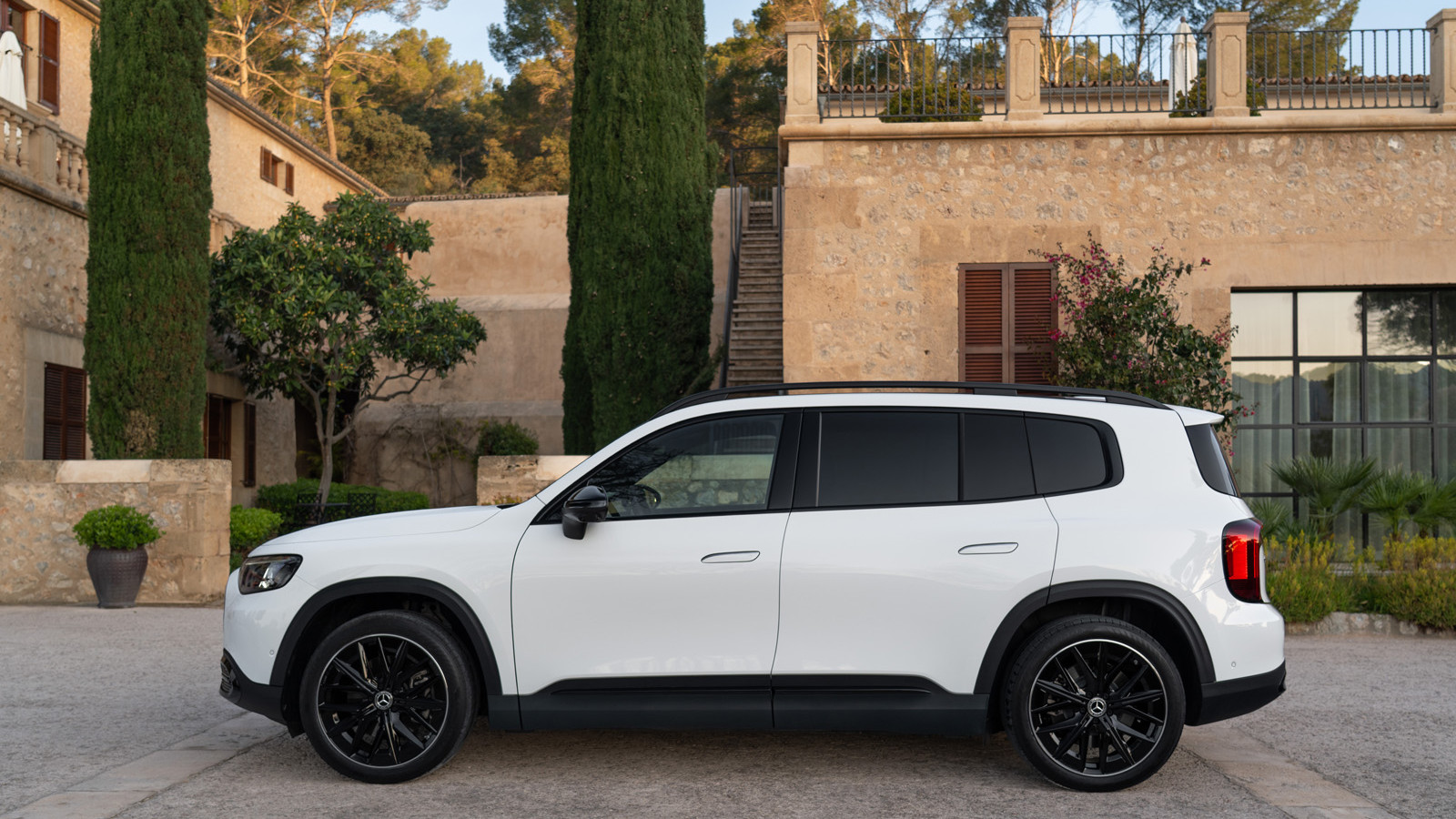
The new GLB is larger than its predecessor, the EQB. It’s exclusively a seven-seater in the UK, but other markets will have access to different seating arrangements.
Mercedes is evidently more serious about its passenger-carrying practicality than it was with its predecessor, so can the new GLB stand out among a crowded class? Read on to find out more.
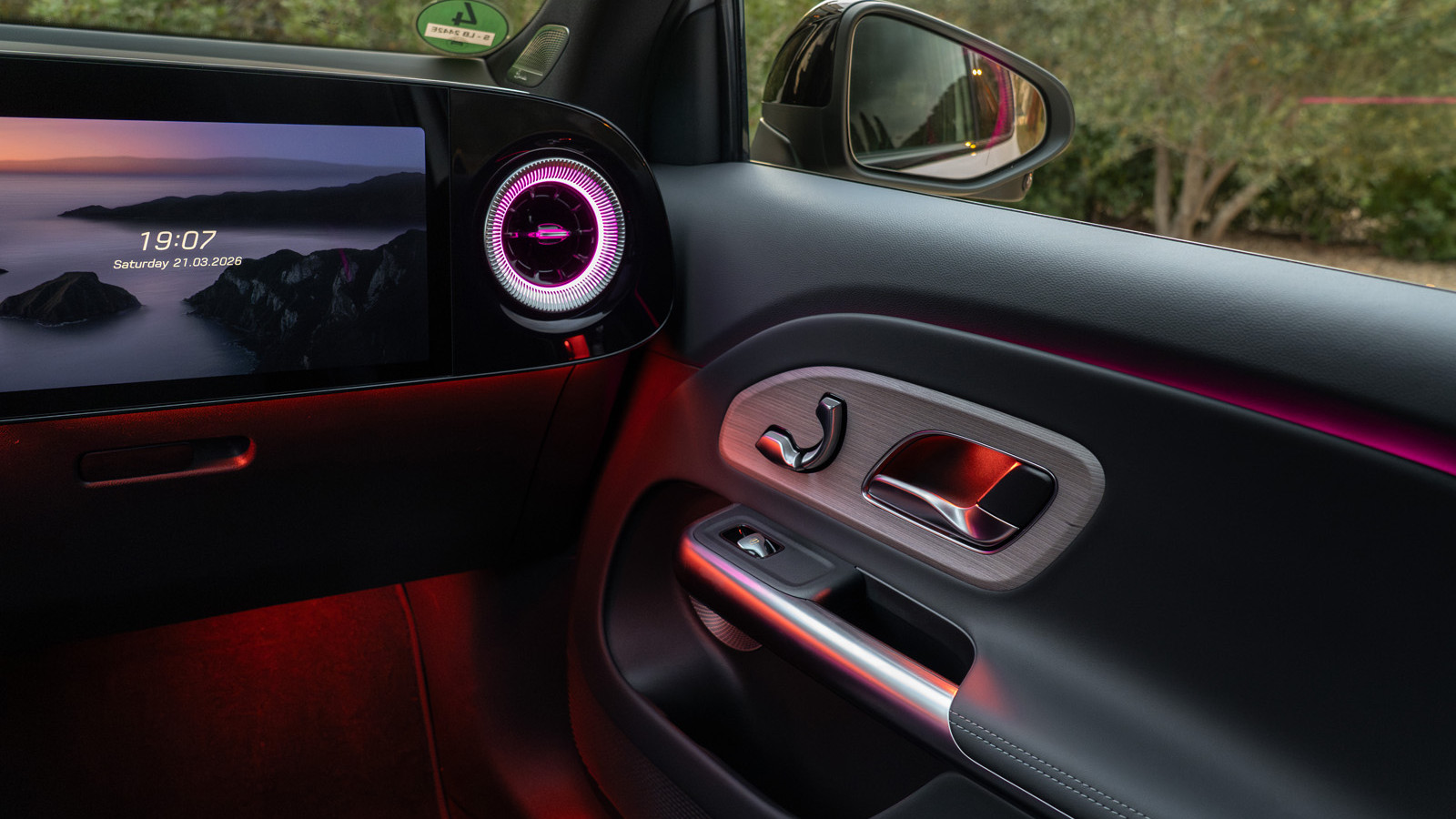
Technology apart, though, the background tactile quality and sense of integrity of many of the fixtures and mouldings aren’t so impressive and don’t do much to lift the GLB into more rarefied territory than its opposition inhabits.
The front of the cabin is practical, with plenty of storage and broadly comfortable, adjustable seats. There’s a glossy, plasticky look to what’s around and about you, Mercedes preferring to fit shiny metallic trim to the doors and centre console, then panel the whole dashboard with its trio of Superscreen displays.
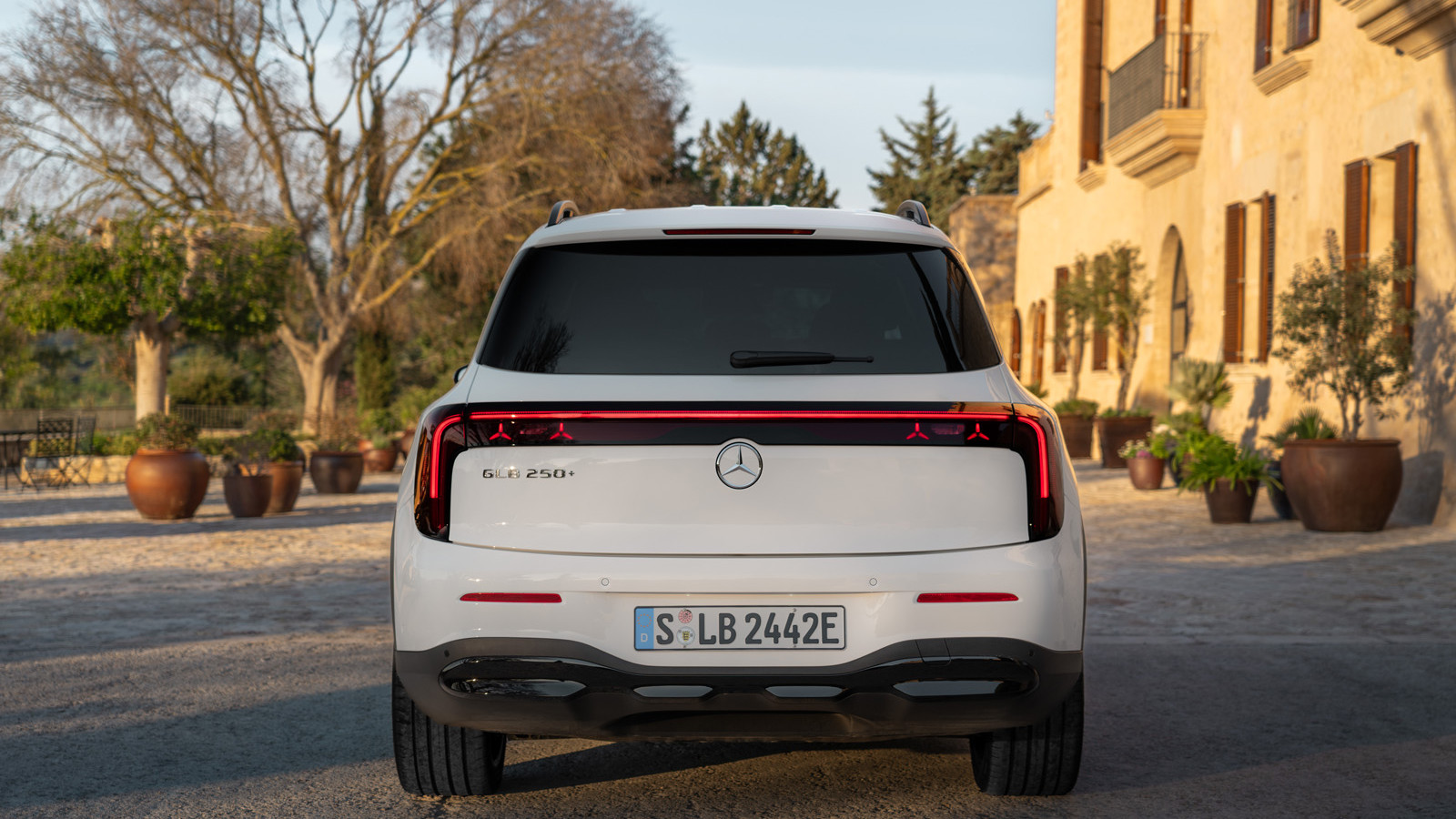
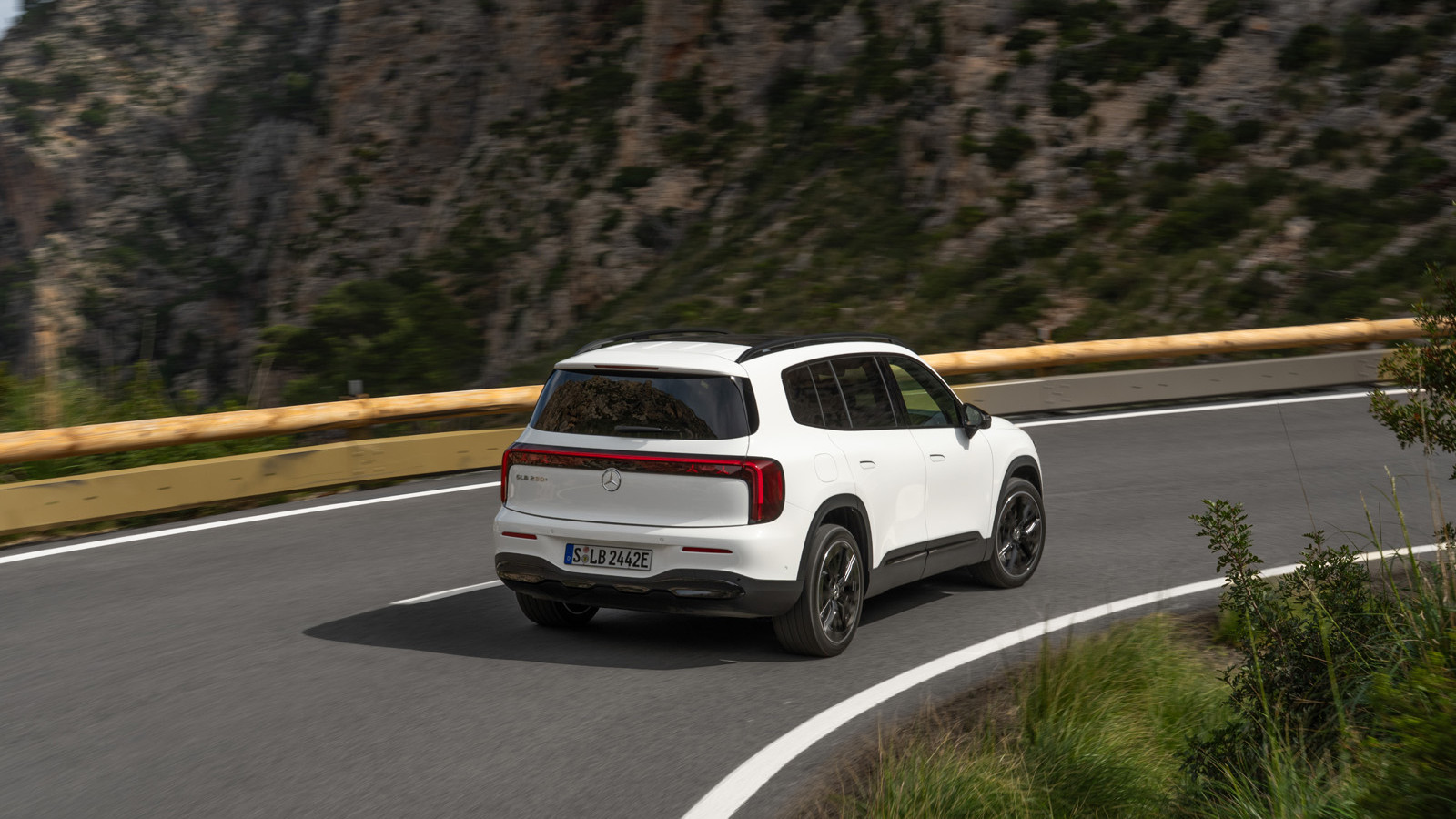
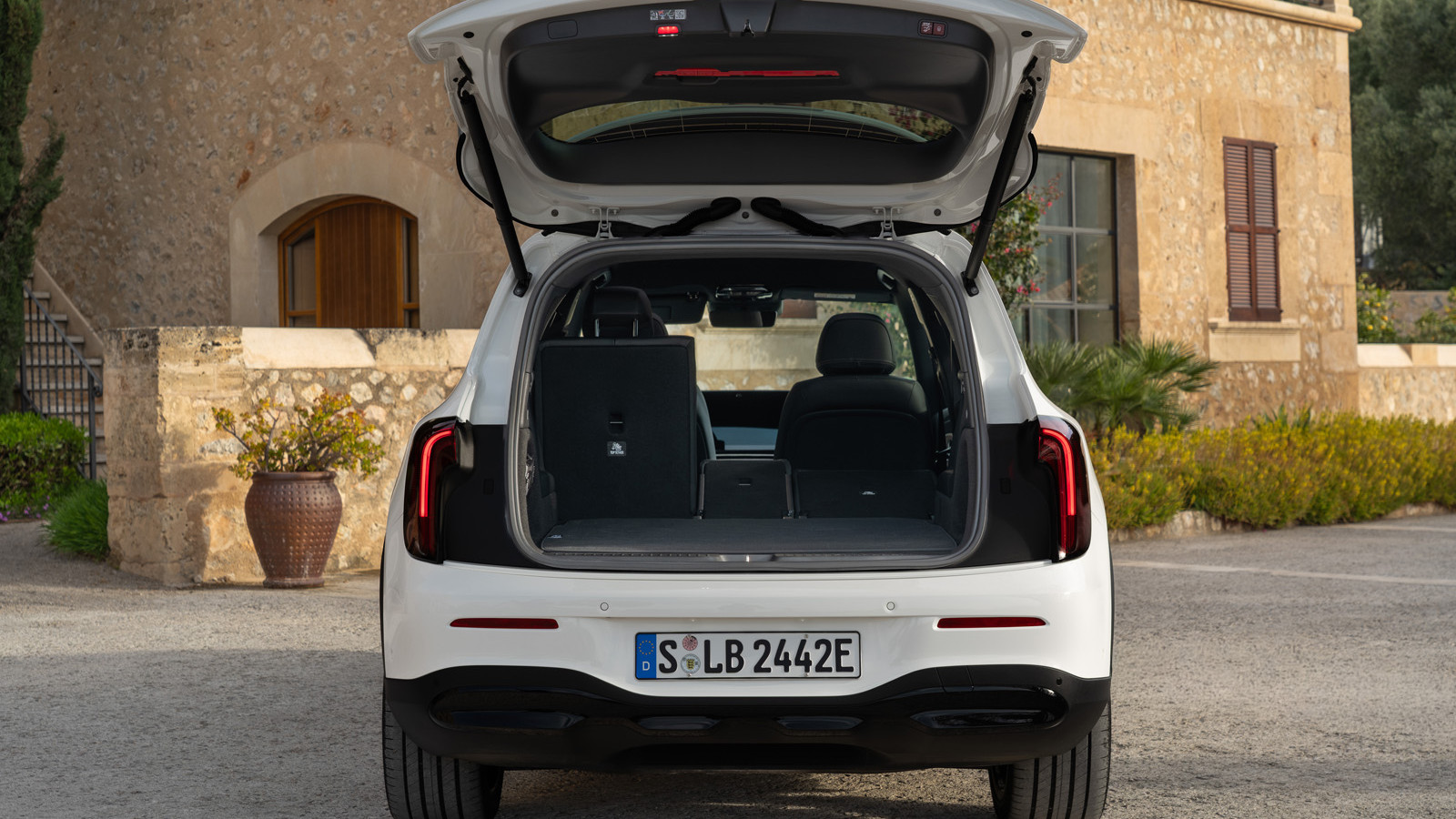
Those familiar with smaller seven-seat SUVs won’t be expecting much boot space to be left once you do put all of the seats up - but here the GLB’s secret weapon comes into play: a remarkably roomy and usefully square-sided 127-litre frunk, big enough for a couple of big holdalls or smallish wheelie bags. This certainly isn’t a car with no carrying space at all when filled with people.
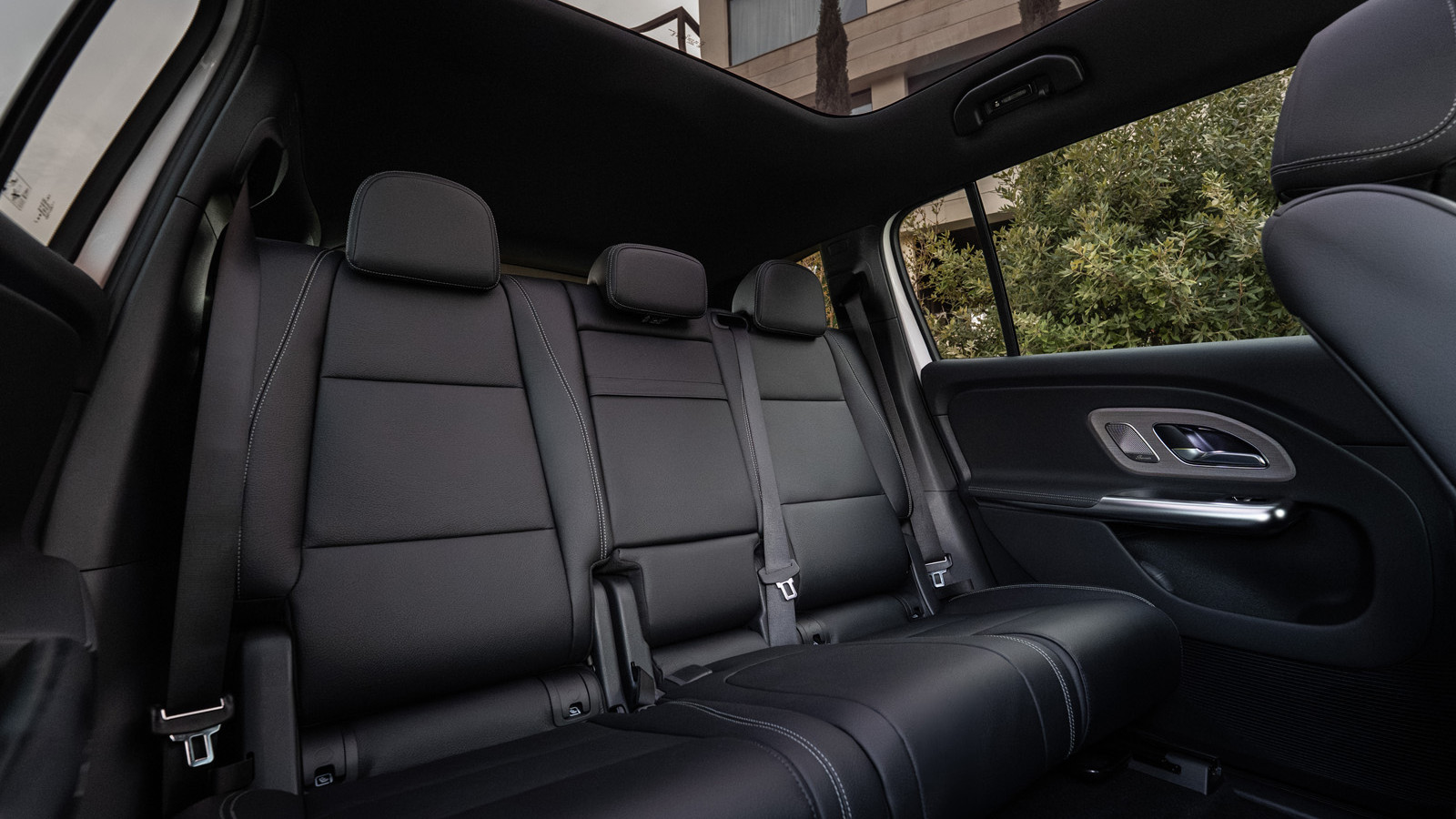
The GLB’s practicality comes as a welcome surprise. You don’t really expect an SUV of this size to offer genuine, adult-appropriate, three-row passenger space, but the GLB gets creditably close.
Three average-height adults could sit in it, one behind the other, comfortably enough, even if you would inevitably feel more hemmed in sitting in row three. The second-row seats slide forward and back by 140mm to juggle space effectively. Access to the third row is tight, as ever, but not problematic.
Both of the EVs at launch have 85kWh of usable battery capacity, and the GLB 250+ offers up to 609km (379 miles) of official range. The long-range Peugeot e-5008 offers slightly longer legs for a similar outlay. But the best that the old EQB could manage was 518km (322 miles) of range. That’s decent progress.
At launch, there are single-motor GLB 250+ and dual-motor GLB 350 4Matic derivatives (a cheaper GLB 200 EV will come slightly later, as will a trio of 48V mild-hybrid petrols). The former is driven by its rear axle and comes with a slightly unremarkable but perfectly acceptable 268bhp. The latter pumps reserves up to 349bhp but fails to take its 0-100kph (0-62mph) sprint down below 5.0 seconds – which might suggest that an even faster model could still be to come.
This becomes the biggest car yet built on the MMA platform, also used by the CLA Saloon and CLA Shooting Brake. That gives it a strong technical start: an 800V electrical architecture that delivers DC rapid charging at up to 320kW, as well as Mercedes’ very latest ‘EDU 2.0’ main drive motor (with its two-speed gearbox and silicon-carbide power inverter).
The new GLB is 48mm longer than the EQB, but some 60mm longer in the wheelbase. For some occupants travelling in the second and third rows, Mercedes claims it offers as much as 68mm more space, either in legroom or headroom. In some positions, there’s more than 60mm extra of both.