
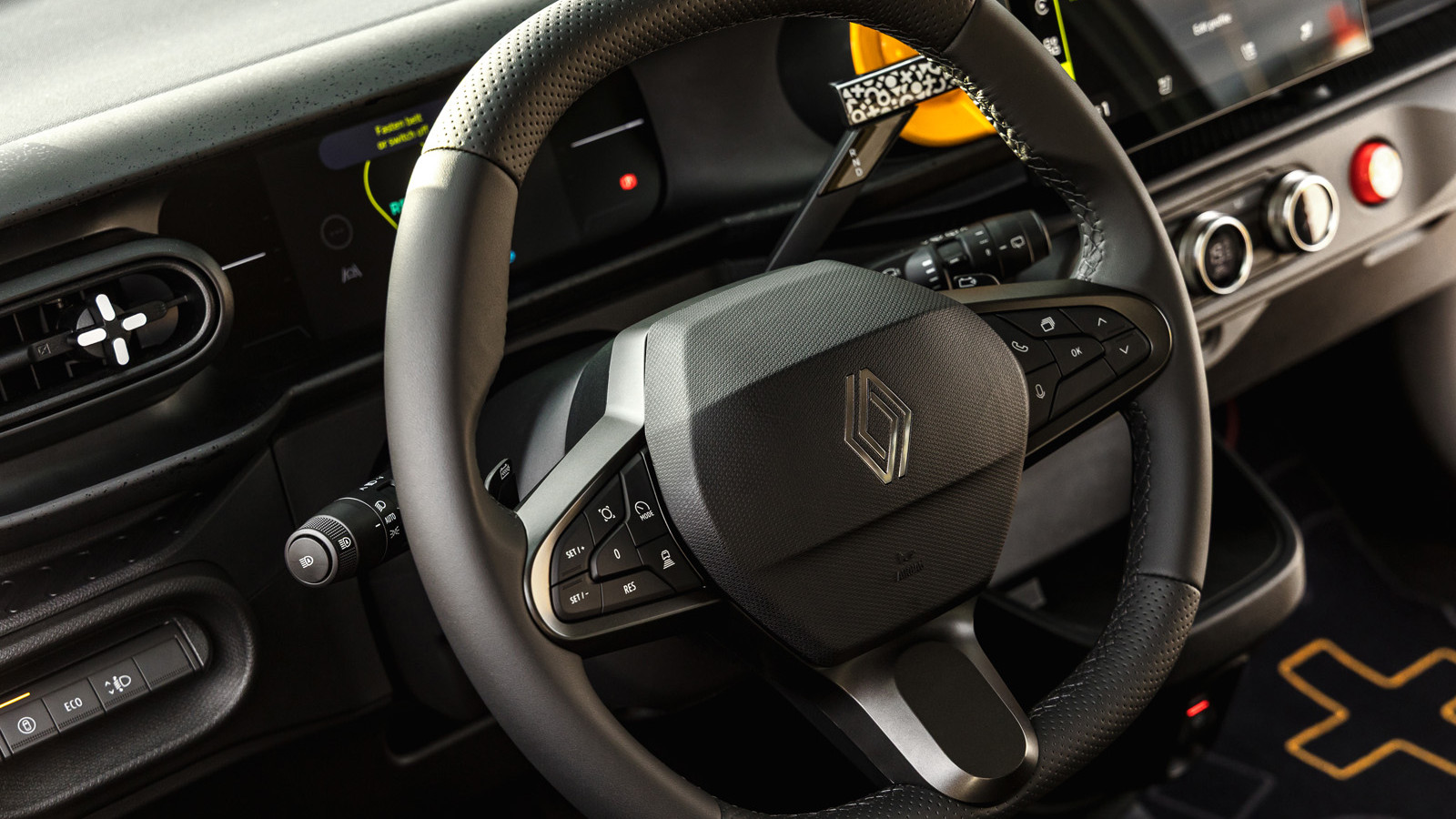
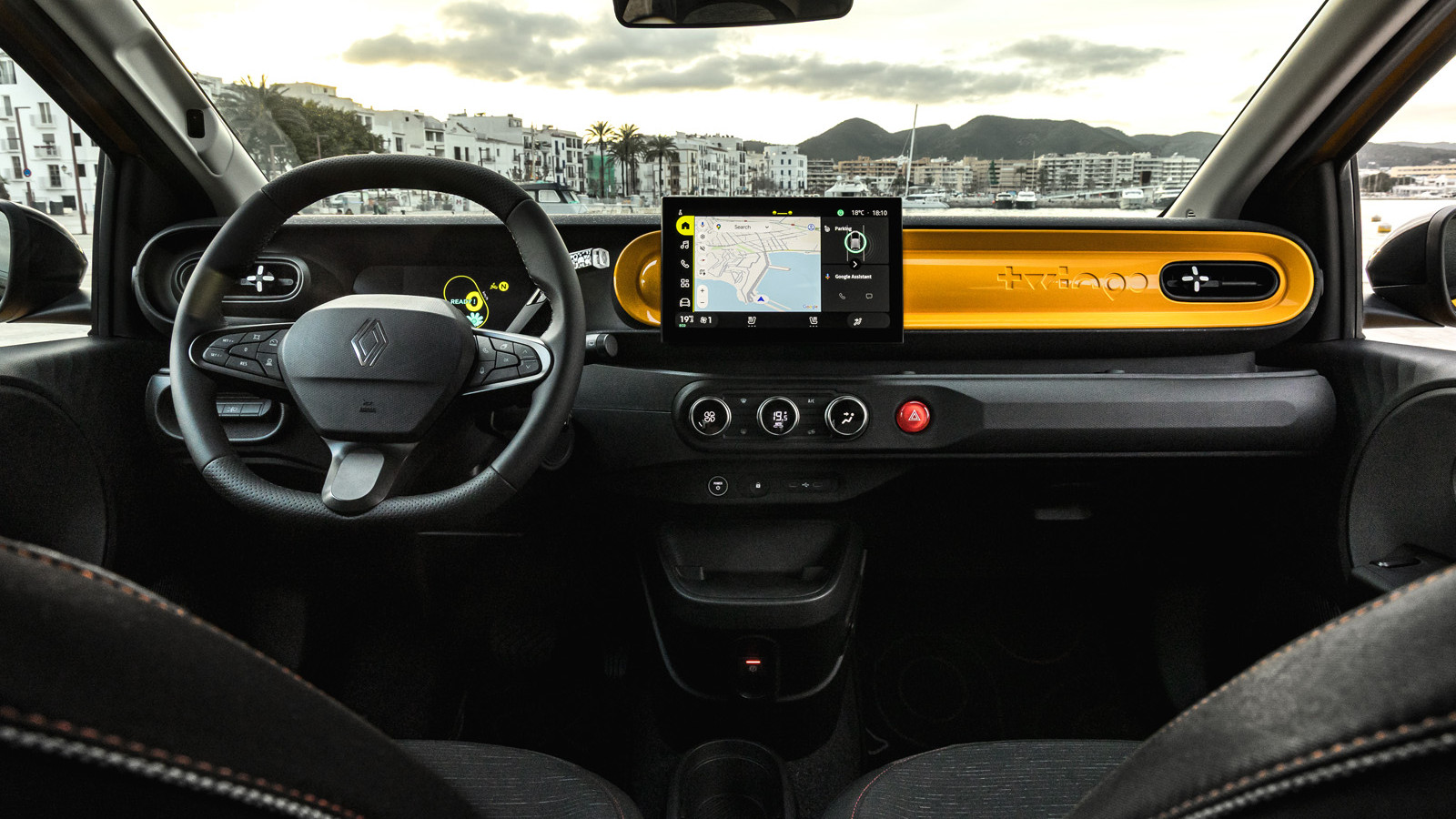
The instruments are bold and simple, while the vents, steering-wheel buttons and array of switches in the middle are all real.
If there is an issue, and it might not be one, the right side of the steering wheel is a bit cluttered, with the gear selector, wiper stalk and audio controls all competing for space behind the wheel, which also has paddles behind it.
Those change the amount of regenerative braking you get: left for more of it, as far as an aggressive lift-off single-pedal mode; right for less, as far as coasting.
Along with its grown-up feeling of solidity, the Twingo brings with it too a sense of fun and enjoyment and involvement. In a world of grey cars with grey interiors, it’s nice to find a bit of colour being injected back into budget motoring.
In mixed driving, I saw nearly 5mpkWh. But there is a caveat to this and my impressions of performance and refinement: I drove largely on urban or rural single-carriageway roads, where I didn’t hit more than 55mph and usually a lot less. How the 80bhp Twingo copes with a lengthier, higher-speed commute is a yarn for another time – but it’s a time to look forward to.18 Renault
It would be nice to see what an Alpine version could be, but I suppose that, along with its stronger motor, it would need a bigger battery, so bigger brakes, and all of a sudden it wouldn’t weigh 1200kg any more. (Old hot hatches, into which you just jammed a big aluminium engine that weighed little more than the usual iron one, had a feasibility advantage here.)
What weight there is is sited low in the body, so it’s not like thick anti-roll bars or stiff suspension are needed to reduce pitch or roll: it does just enough of each to make for a rewarding driving experience.
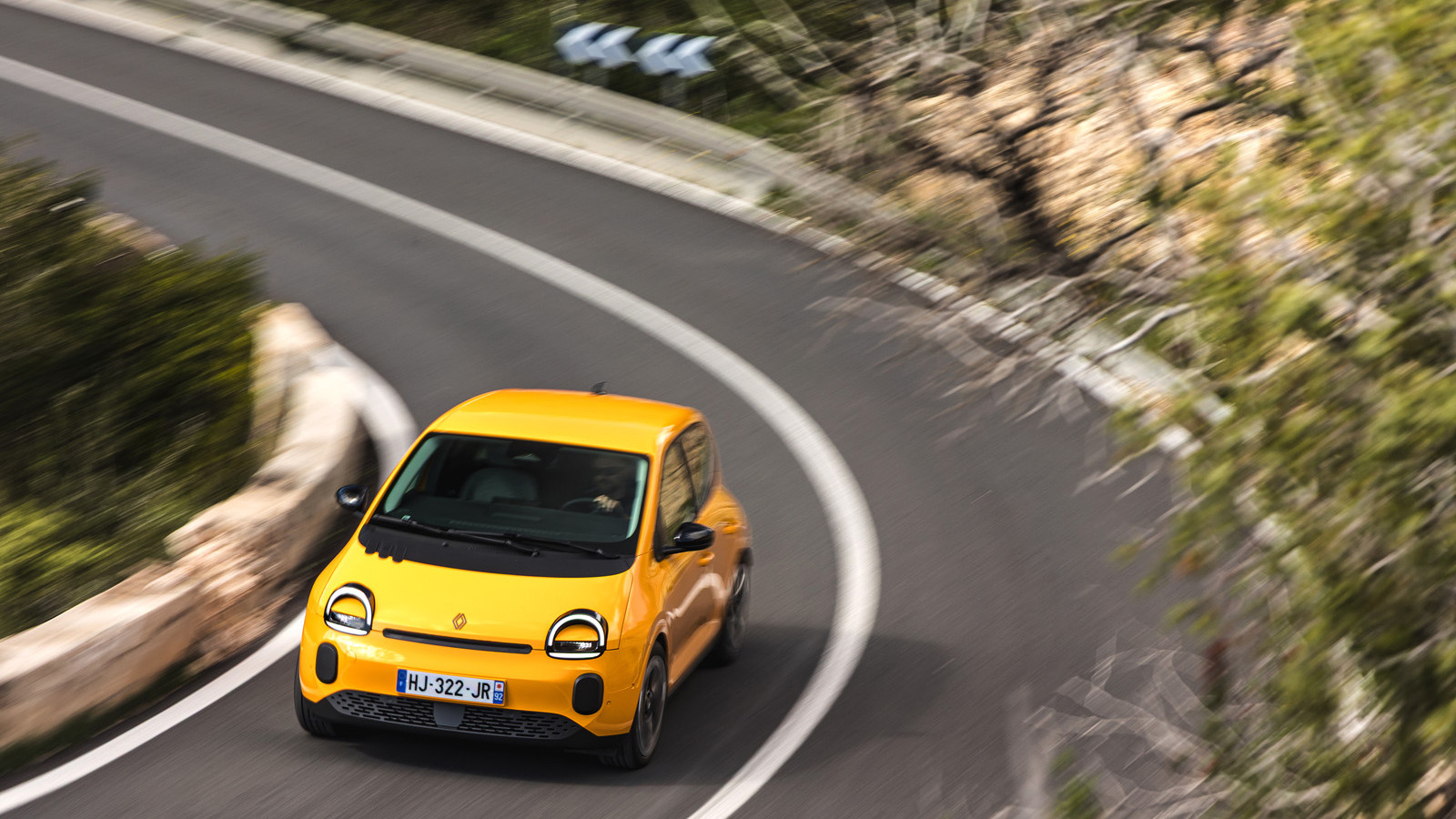
It hangs on pretty gamely up to the point where its 205/45 Continental EcoContact tyres start to scrub wide into predictable and manageable understeer.
Even if that were all, it would be fun, but there’s more. The ride on 18in alloys (there are 16in steels on a base model) is really composed, absorbent when you want, but controlled on demand too.
One of the reasons why the Twingo weighs less than average is Renault’s dedication to parts reduction: there are 720 in the Twingo, where 1200-plus is normal.
There’s a soft-ish tip-in but nice throttle response thereafter, good brake feel and fun to be had from clicking up the regen on the way into country-road bends. The Twingo is a pleasure to drive. It’s short, the wheels are at each corner, and the wheels turn sufficiently that the turning diameter is 9.87m.
As per the 5, the Twingo is front-driven with a single reduction gear, but it does have its own bespoke motor, making a distinctly modest 80bhp, albeit with 129lb ft of torque.
The Twingo weighs a good quarter-tonne less than the 5, though, at 1200kg (light for an EV, if not by petrol city car standards), so it can reach (0-100kph (0-62mph) from rest in 12.1 seconds. It will do 130kph (81mph) flat out.
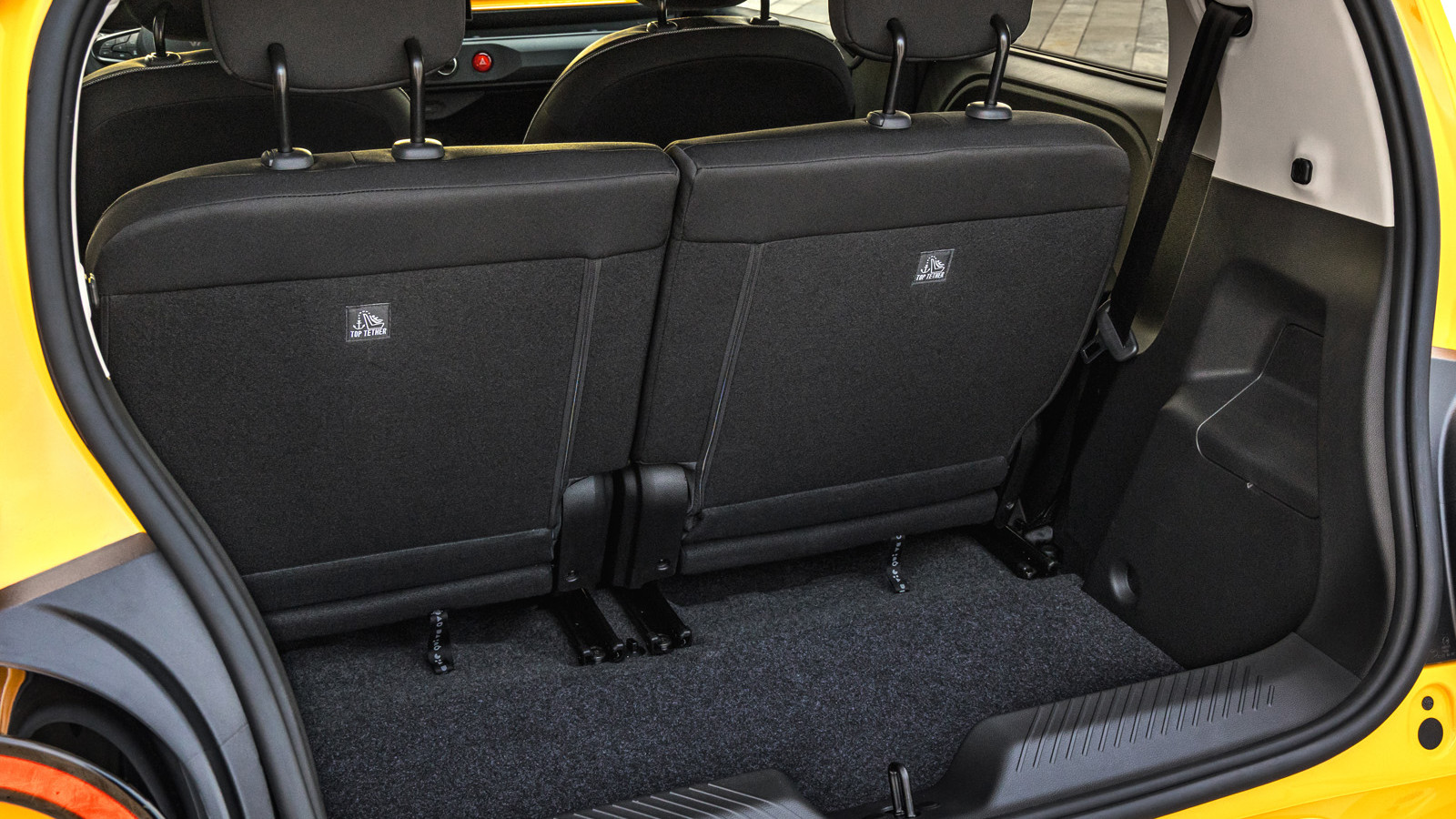
And, perhaps more innovatively, the boot floor is split 50:50, so you can lift half of it to reveal a 50-litre underfloor compartment to, say, remove the charging cables without having to lift all your bags out. All things considered, boot capacity is put at 360-1010 litres.
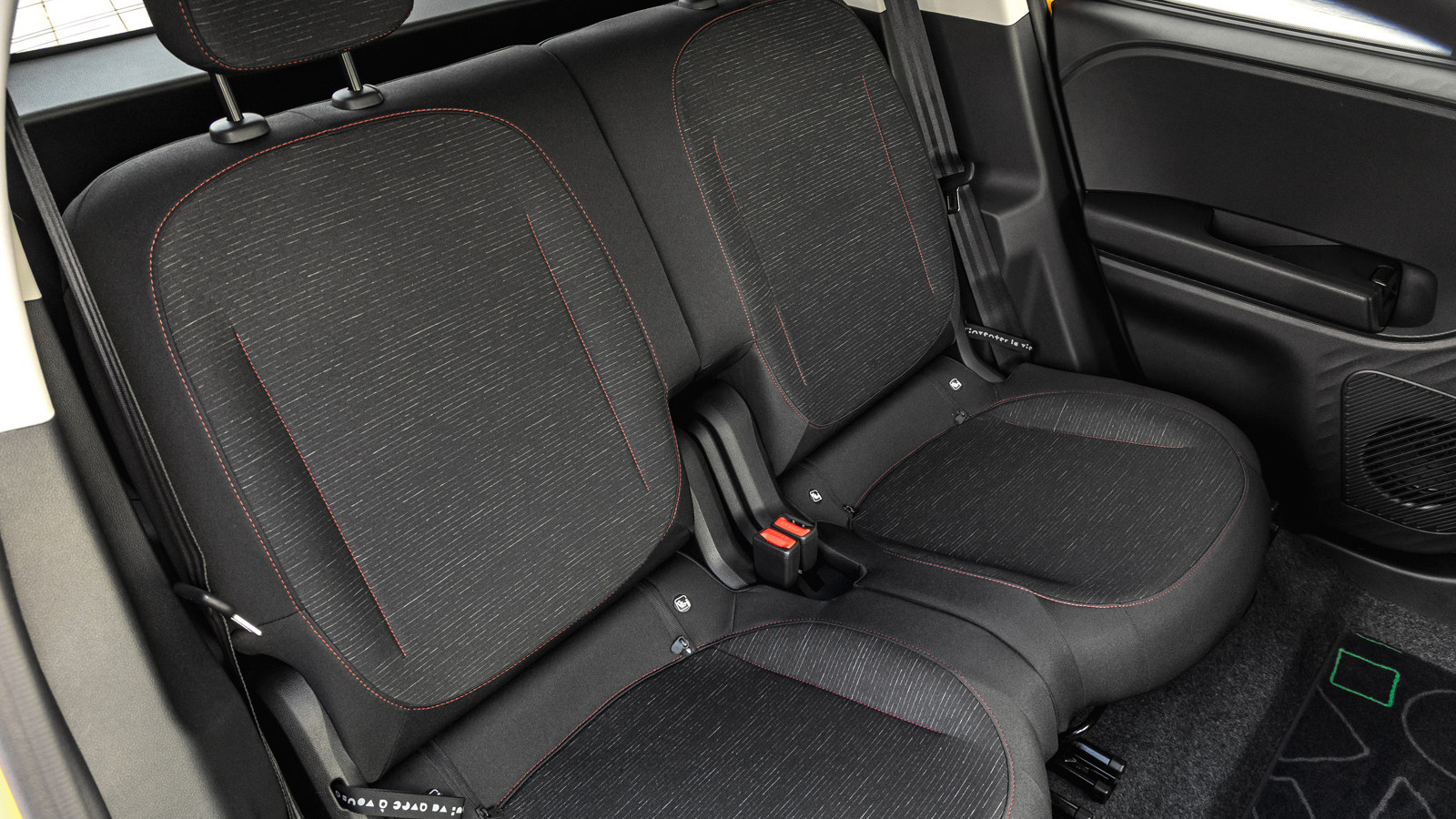
To counter the fact that short cars can’t have big rear accommodation and big boots, the Twingo has just two chairs in the rear, both of which slide independently of each other through about 17cm, so you can trade knee room for boot space. They fold separately, too.
This is the last of the rejuvenated cute Renaults.
The Twingo first appeared in 1992 as a city car so sweet that it apparently deserved a follow-up in the same fashion as the recent 5 and 4 – electric, retro reboots of cars we remember from our younger days.
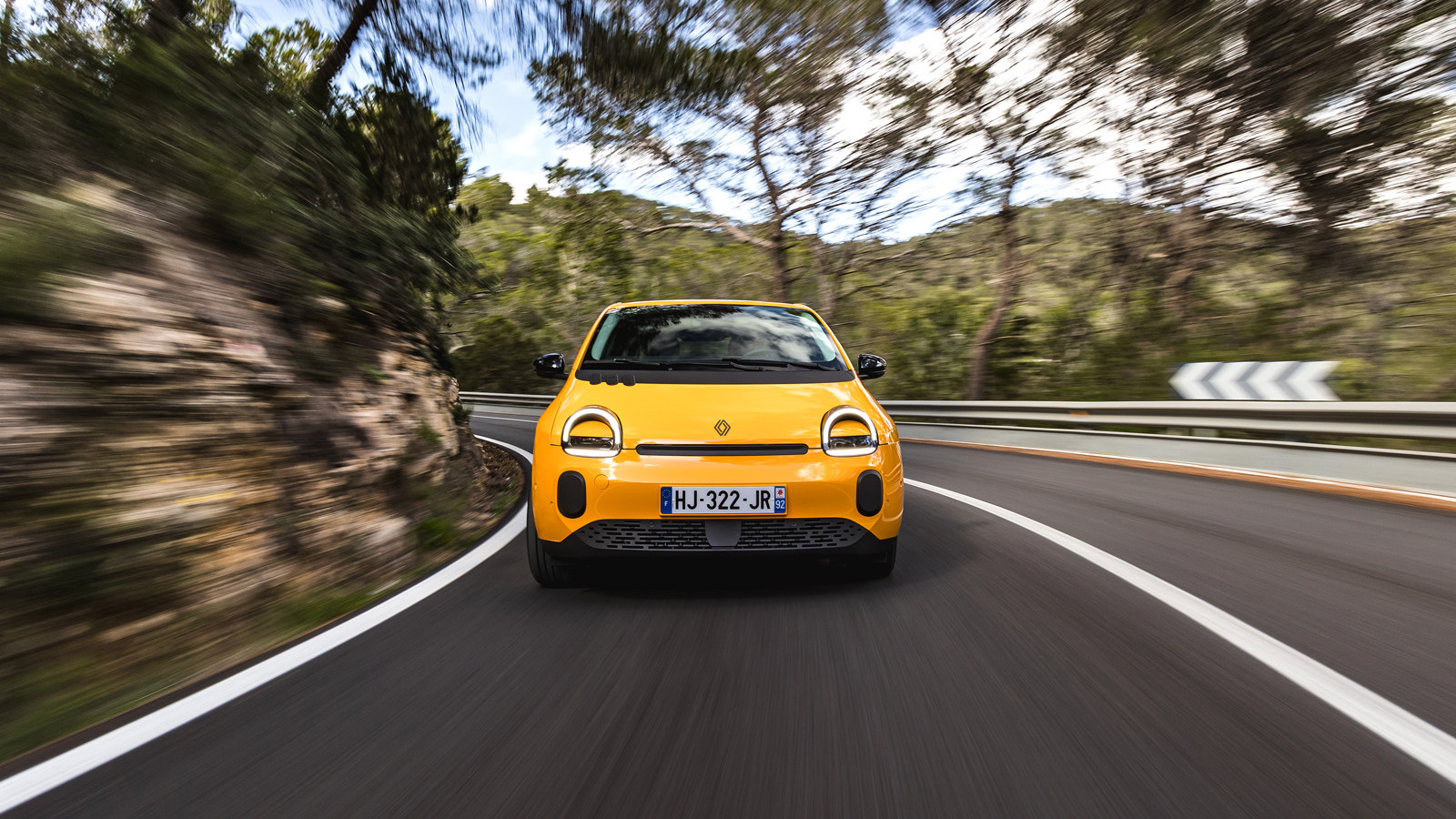
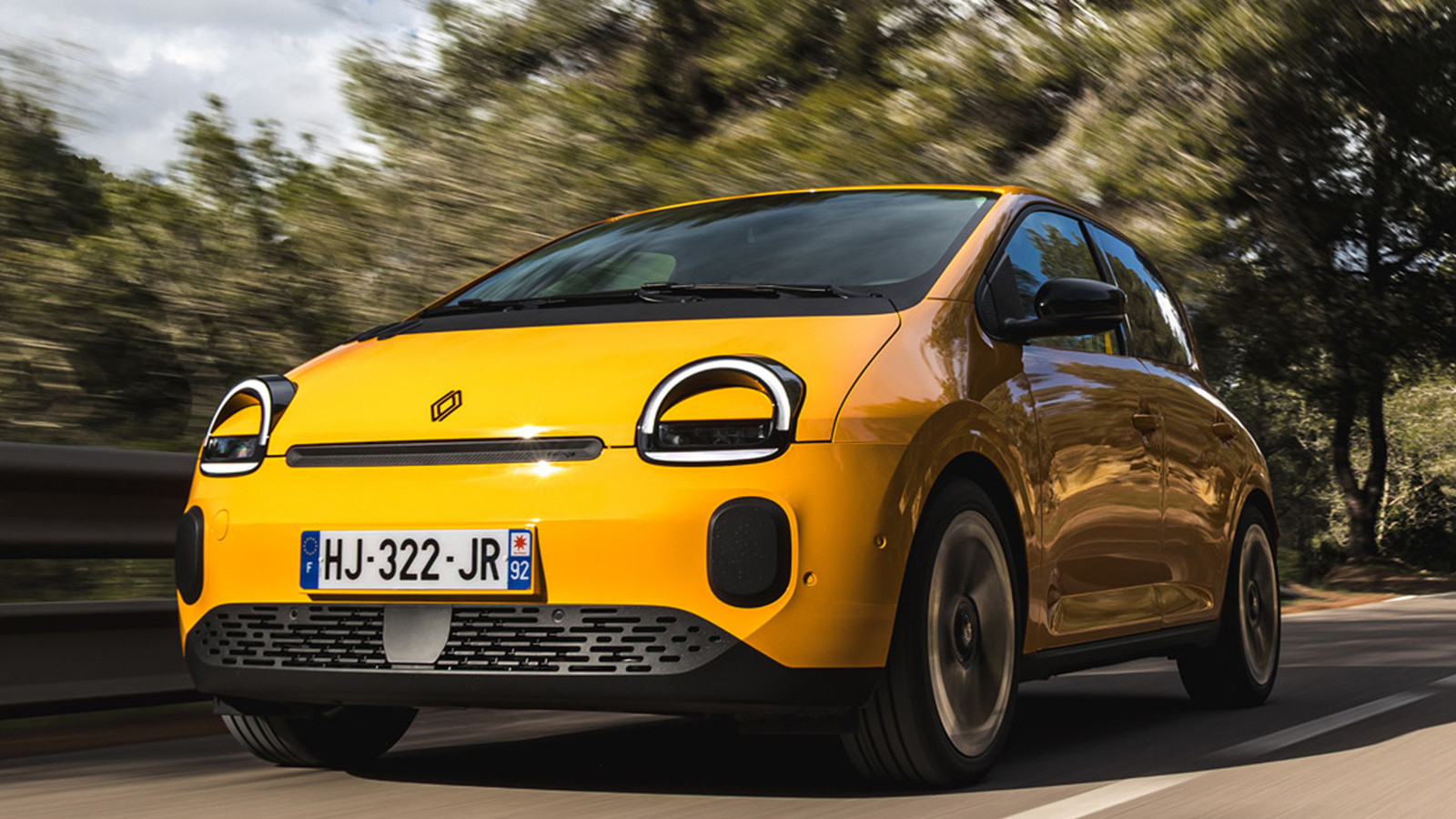
The Twingo was a city car then, and it’s one again now too. The French, owing to its headlights, apparently have affectionately dubbed it ‘Le Frog’ (after an animated fictional character, which is presumably why it’s not ‘La Grenouille’).
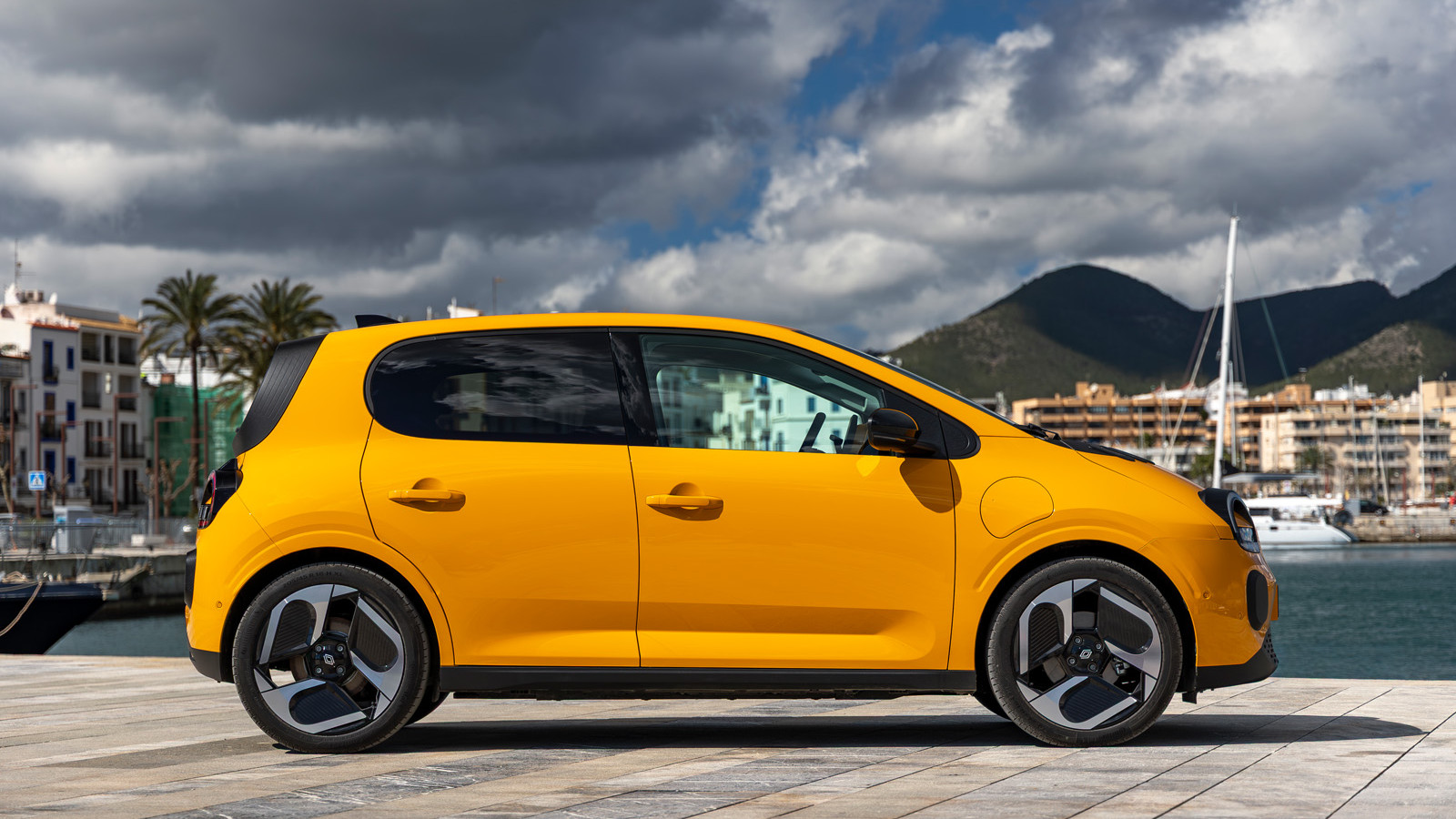
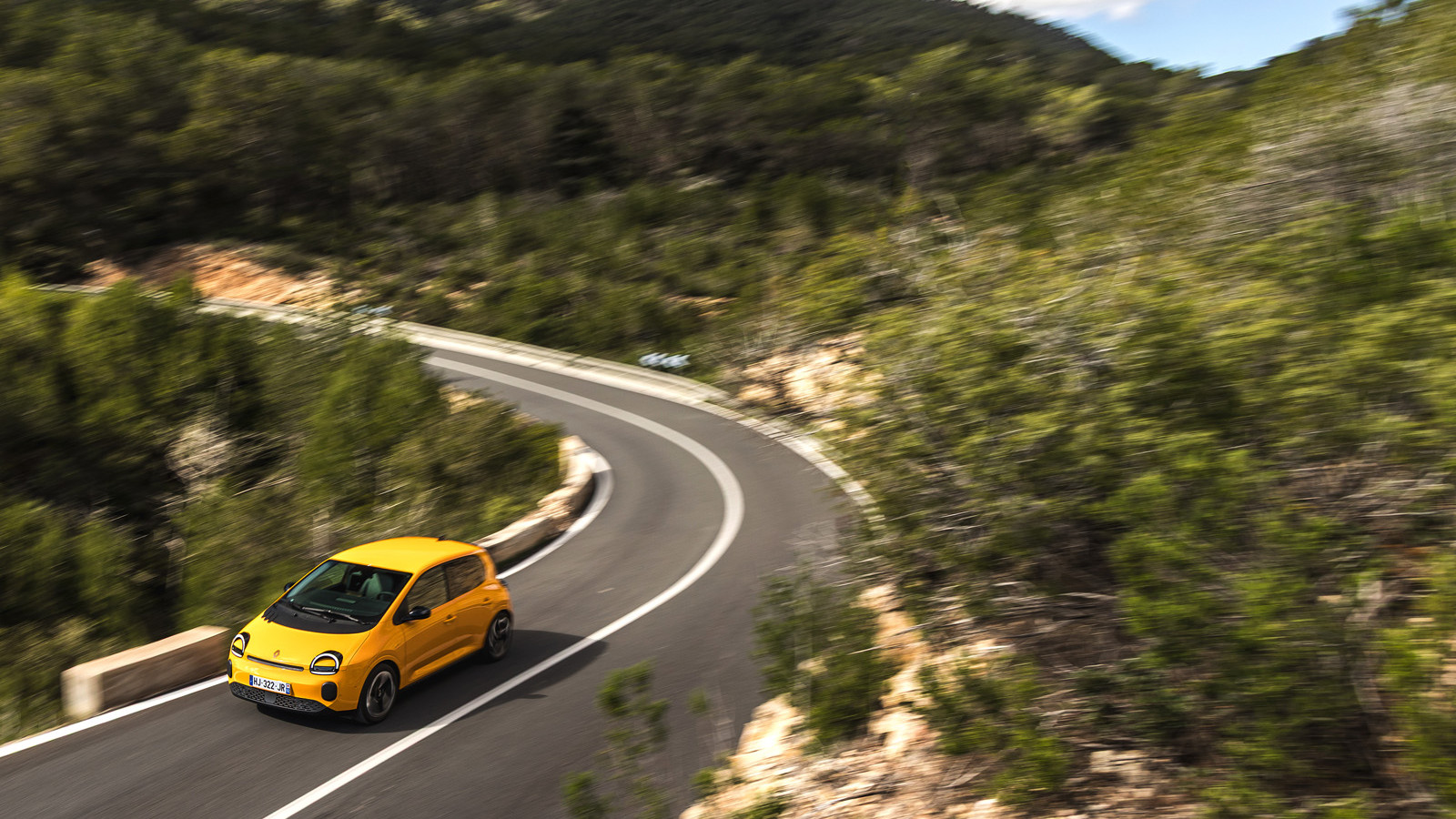
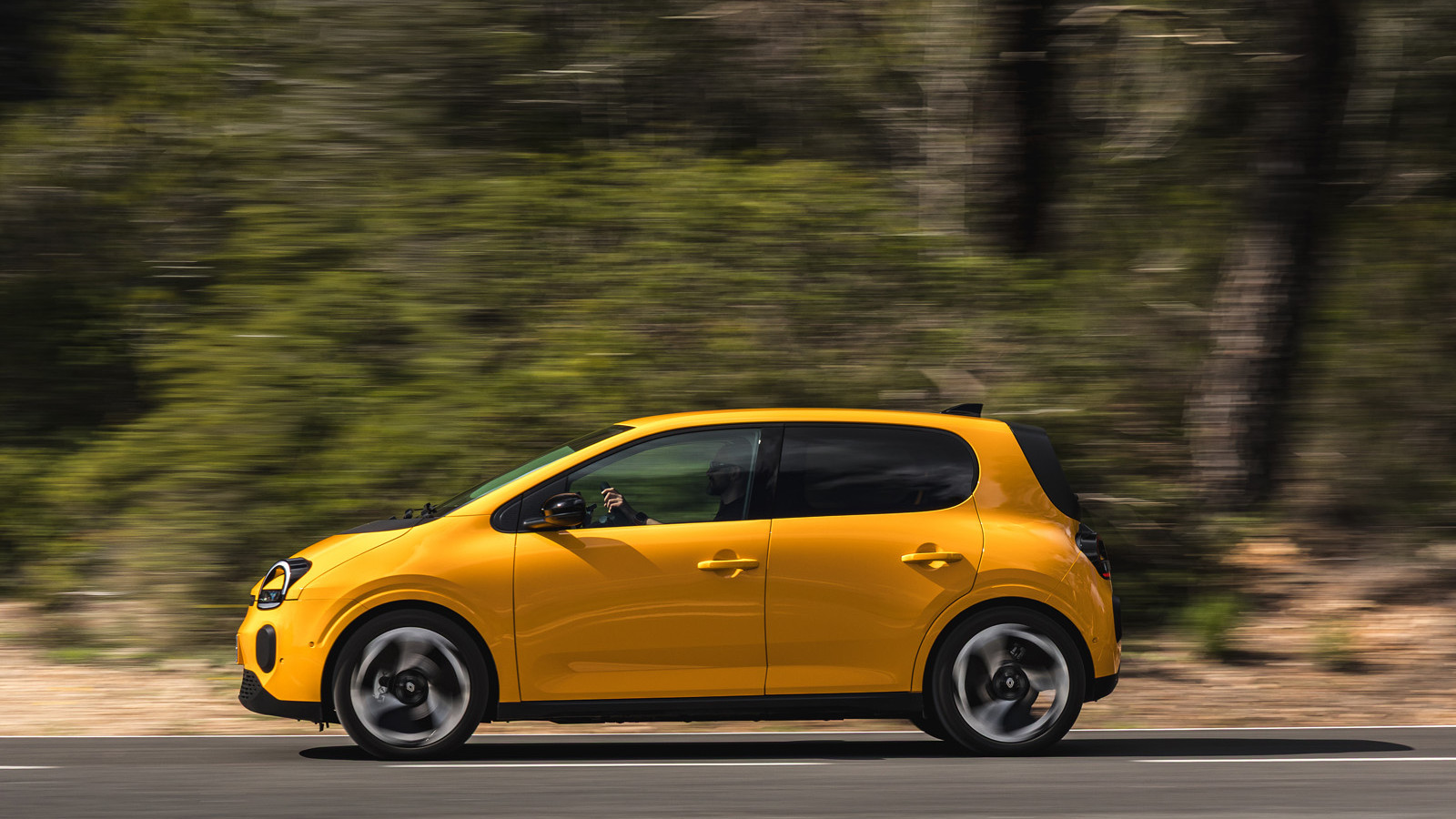
Measuring 3.79m long and with a 2.49m wheelbase, the new Twingo is small. It’s a natural rival for the likes of the BYD Dolphin Surf, Fiat 500e and Hyundai Inster.
Aside from its adorable styling, can the Twingo stand out? We’ve driven it, so read on to find out.
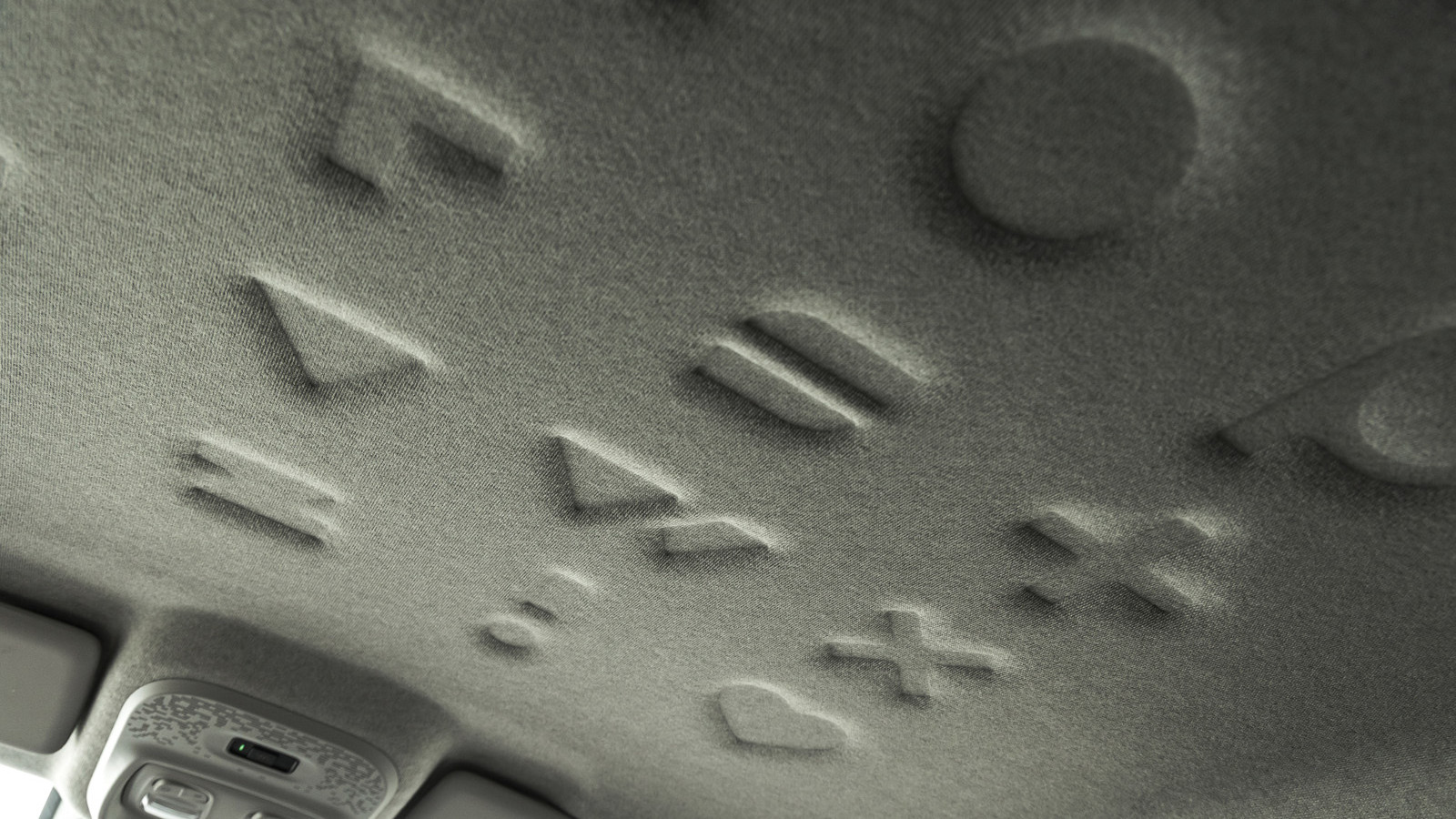
Renault designed a Twingo font, and the alphabet, plus a couple of special characters, are stamped into the headlining. This cool design costs nothing to implement, explains van den Acker, because you’ve got to stamp the roof lining anyway. The designers wanted a ‘small outside, big inside’ feel, and plenty of glass area and no segmentation between occupants means that’s what they’ve got.
Things start well inside. There are proper chunky door handles and a funkily-designed interior with body-coloured highlights and soft rubber mats, at least in the stowage bins, albeit not everywhere. Some proper dials and buttons remain and, a bit like in the previous Fiat Panda, there are themes to lift the ambience without costing anything.
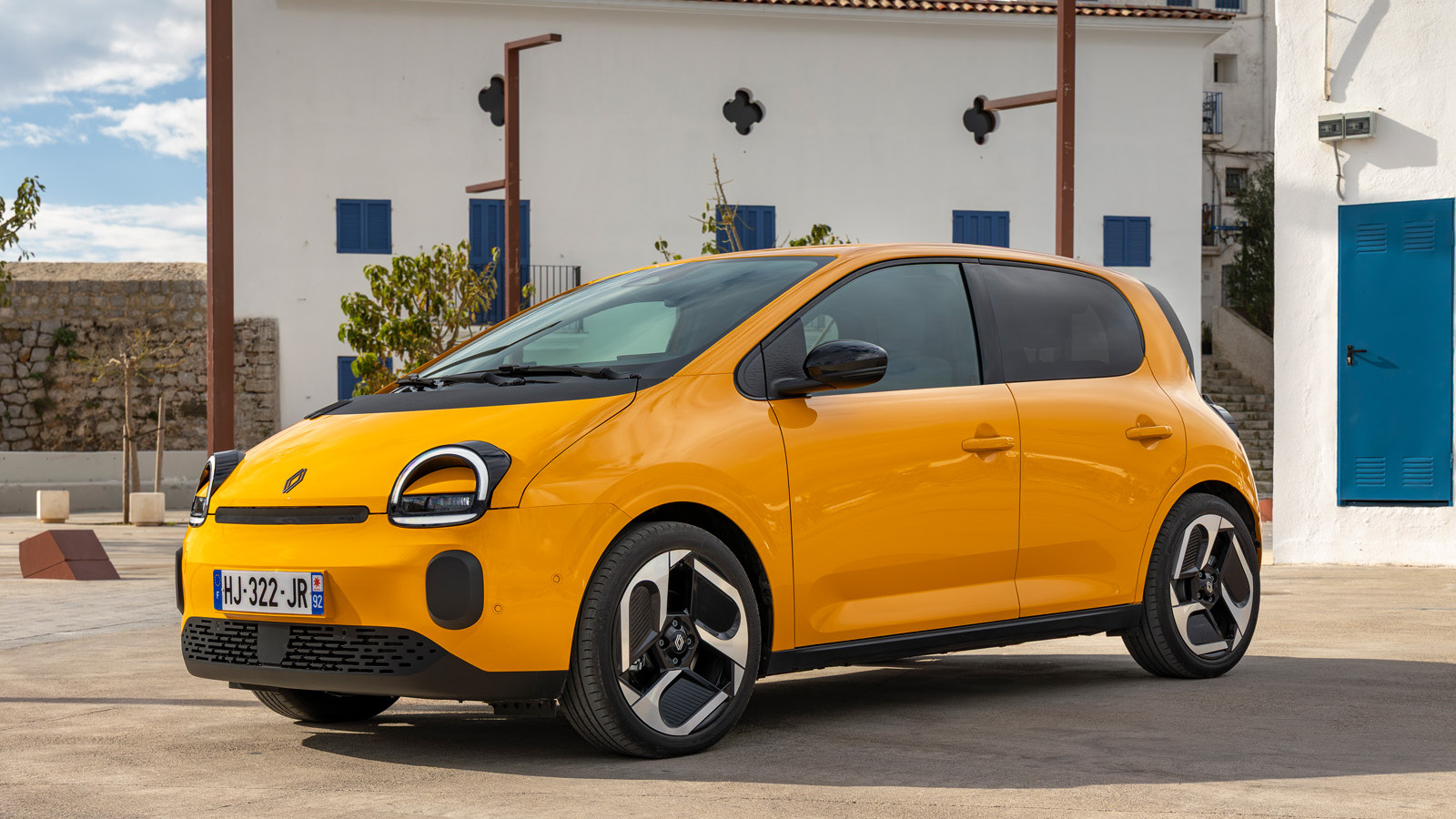
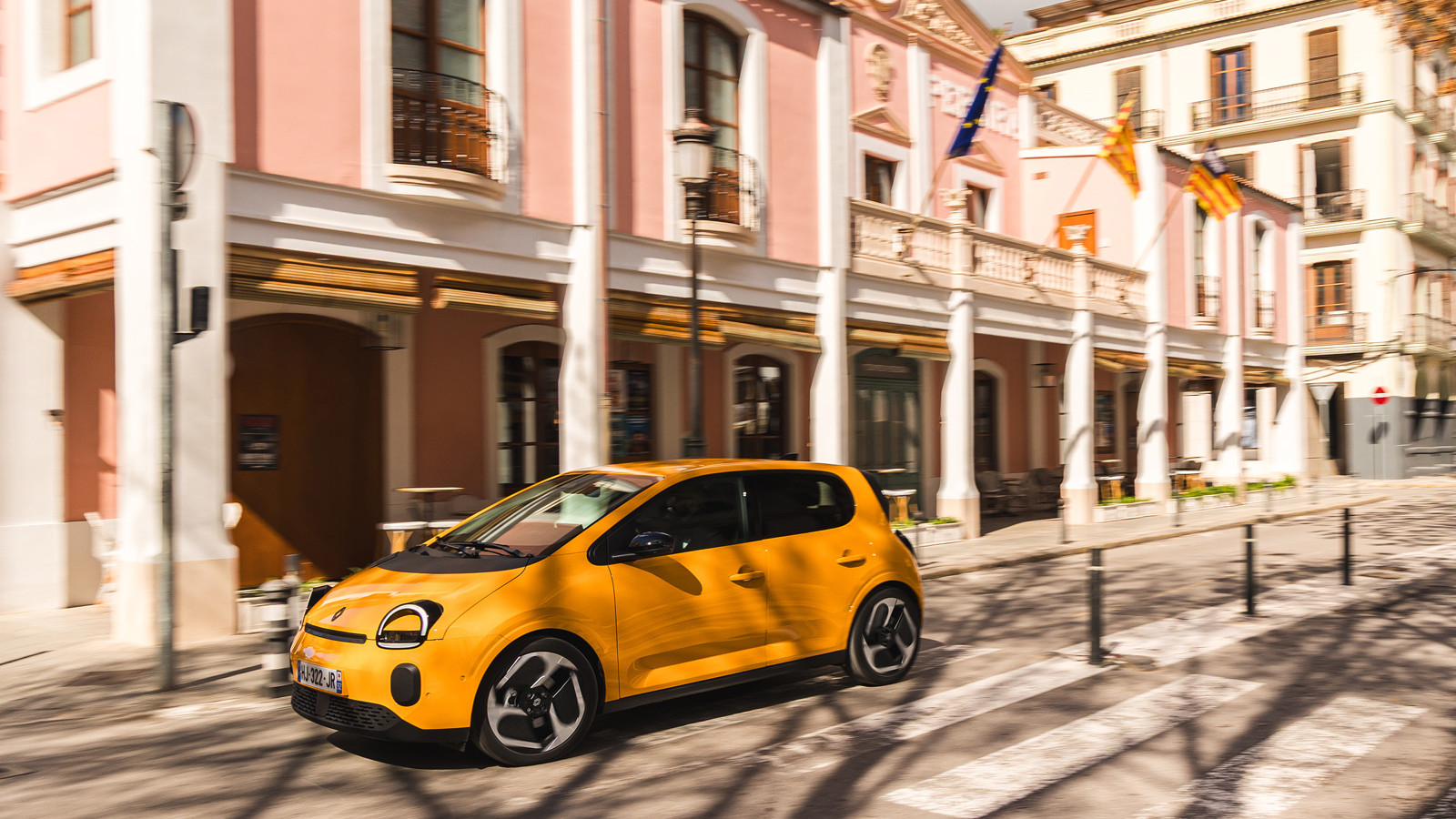
“In Paris, you need overriders,” says design boss Laurens van den Acker, who does genuinely seem to love this car, and not just because he works for Renault. “The proportions are frankly perfect. It looks like a bonbon; you could eat it.”
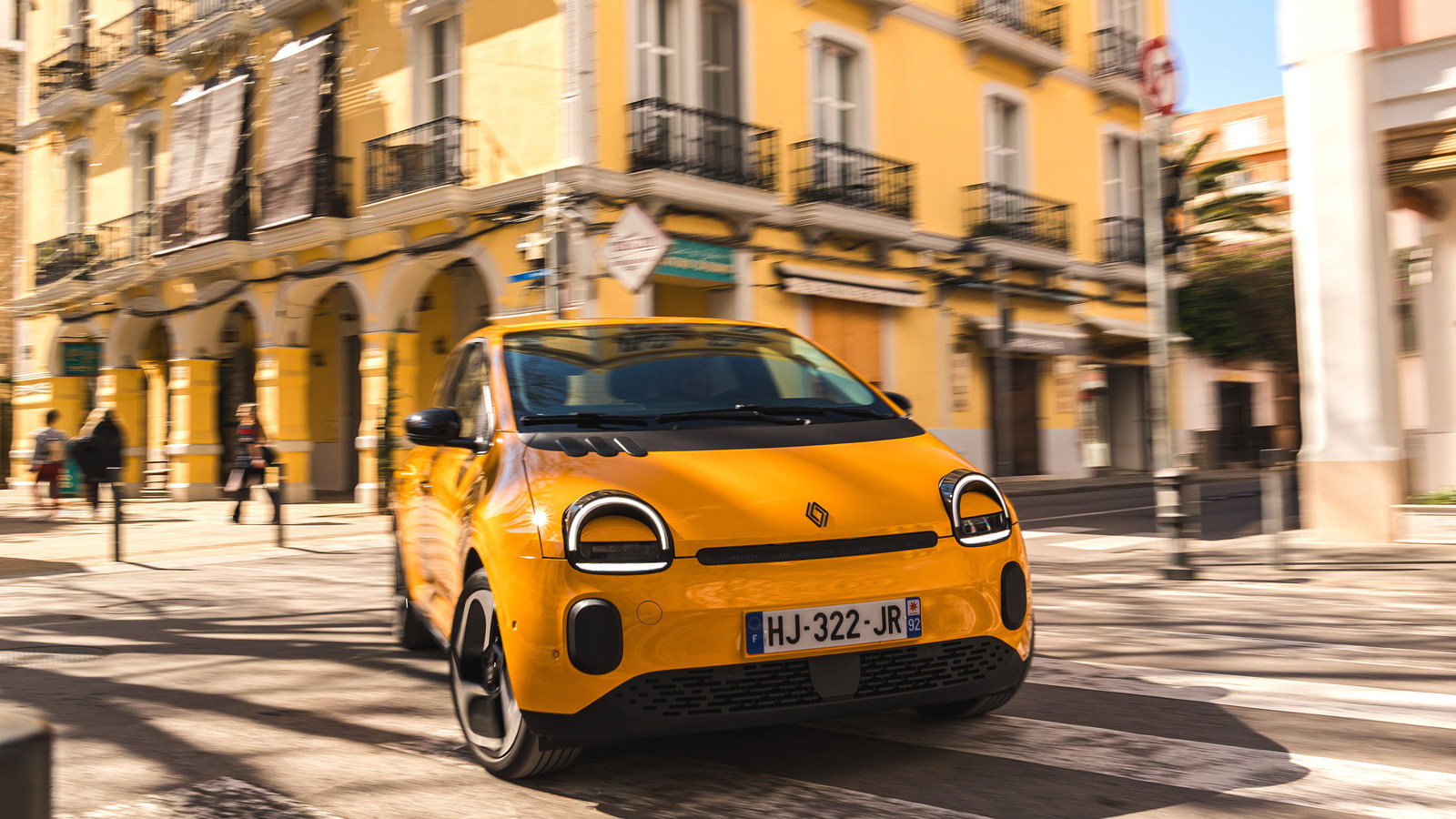
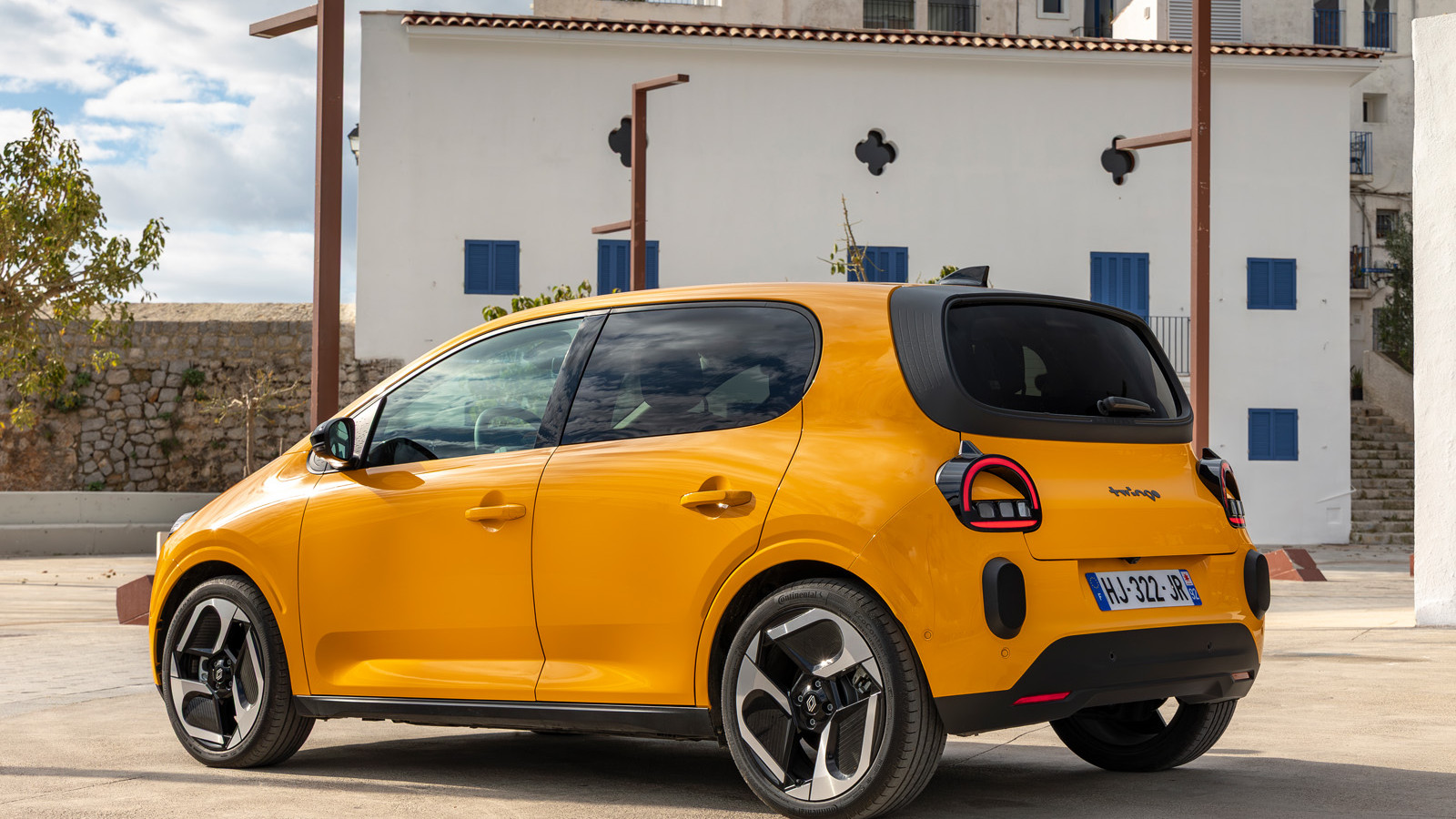
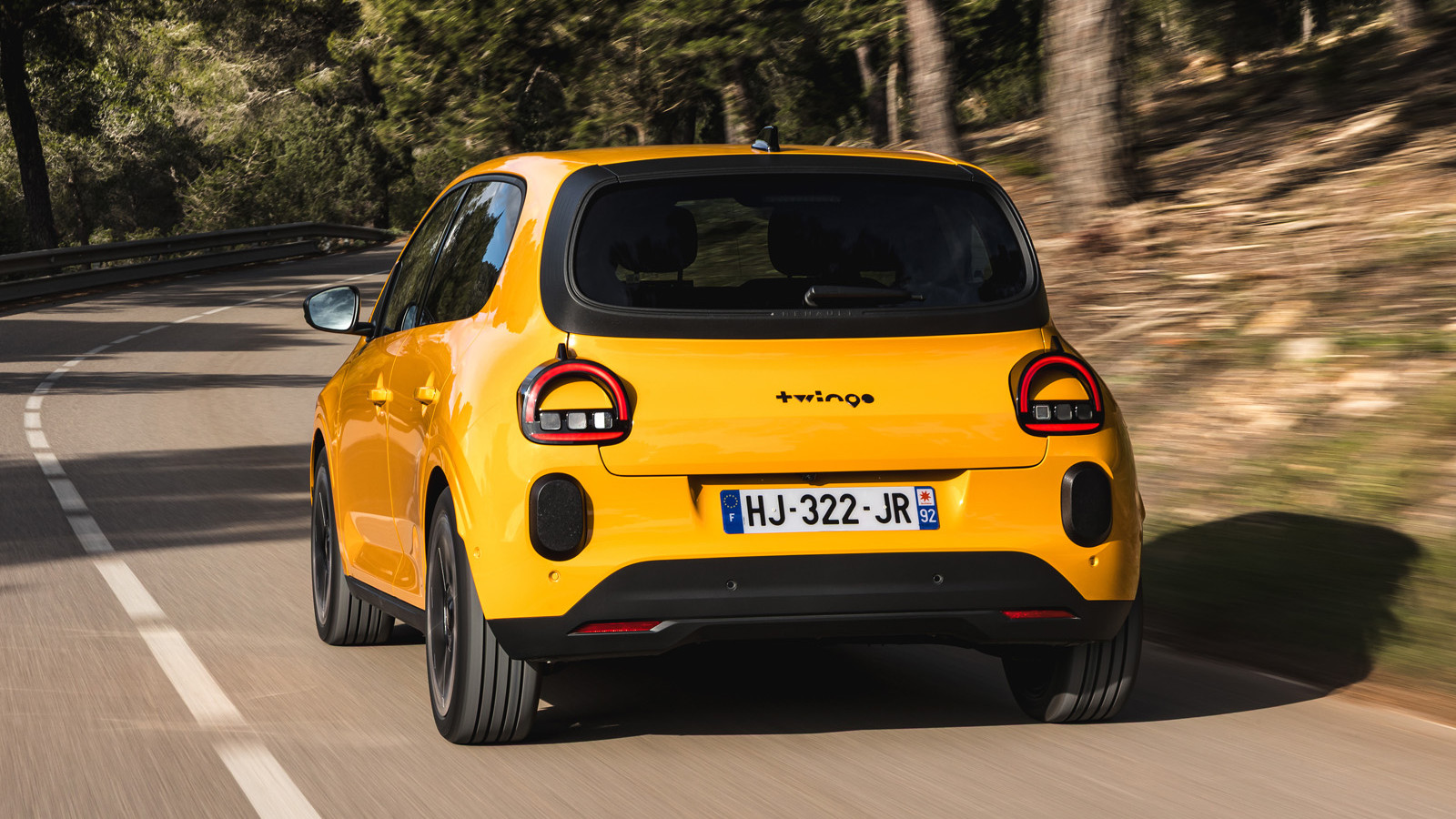
At a steady 65kph (40mph), those fins are worth three miles of range. Little buffers on the bumper edges reminisce about the black bumpers of the Mk1 Twingo and are useful in cities where park-by-feel is mandatory.
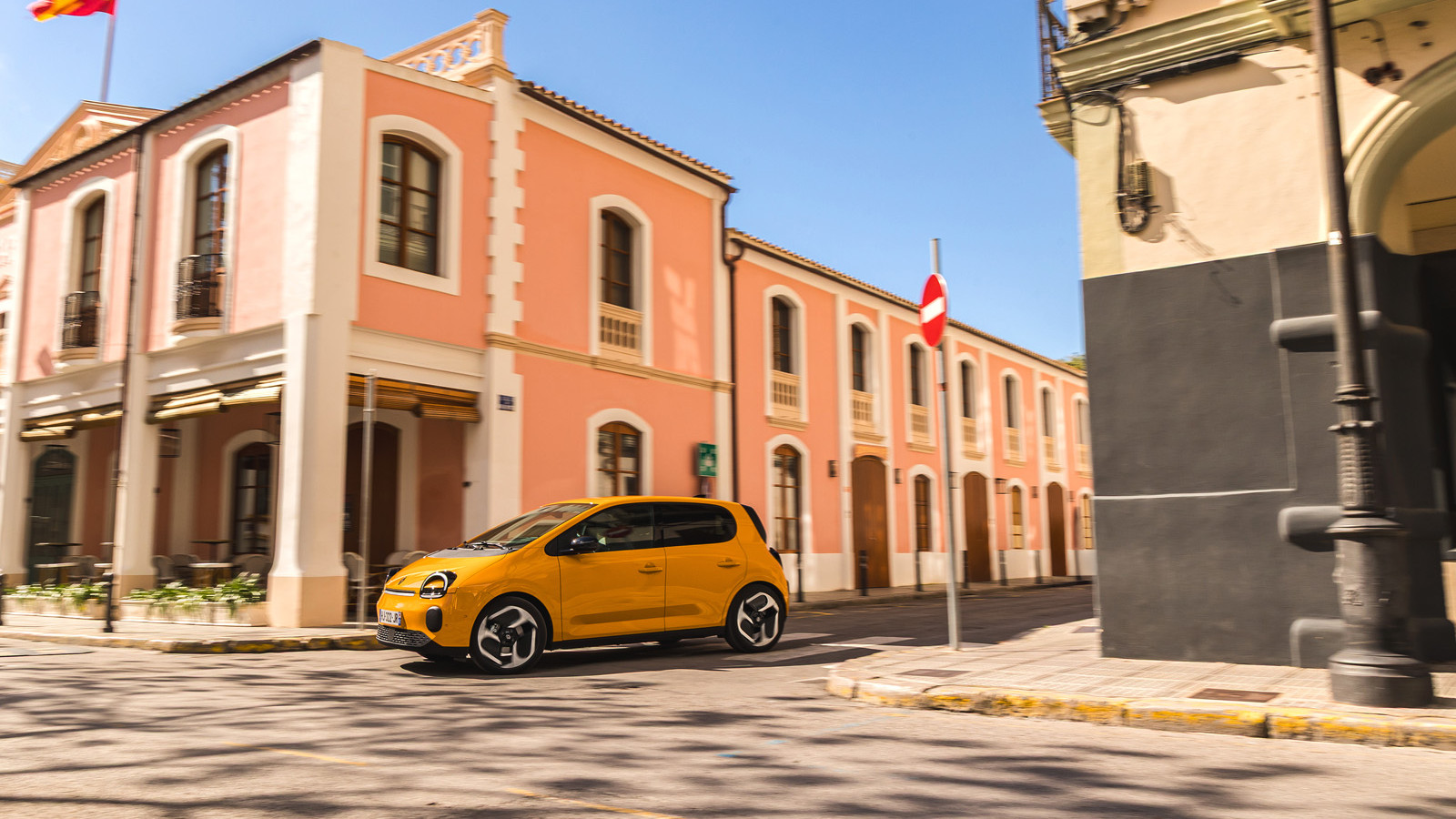
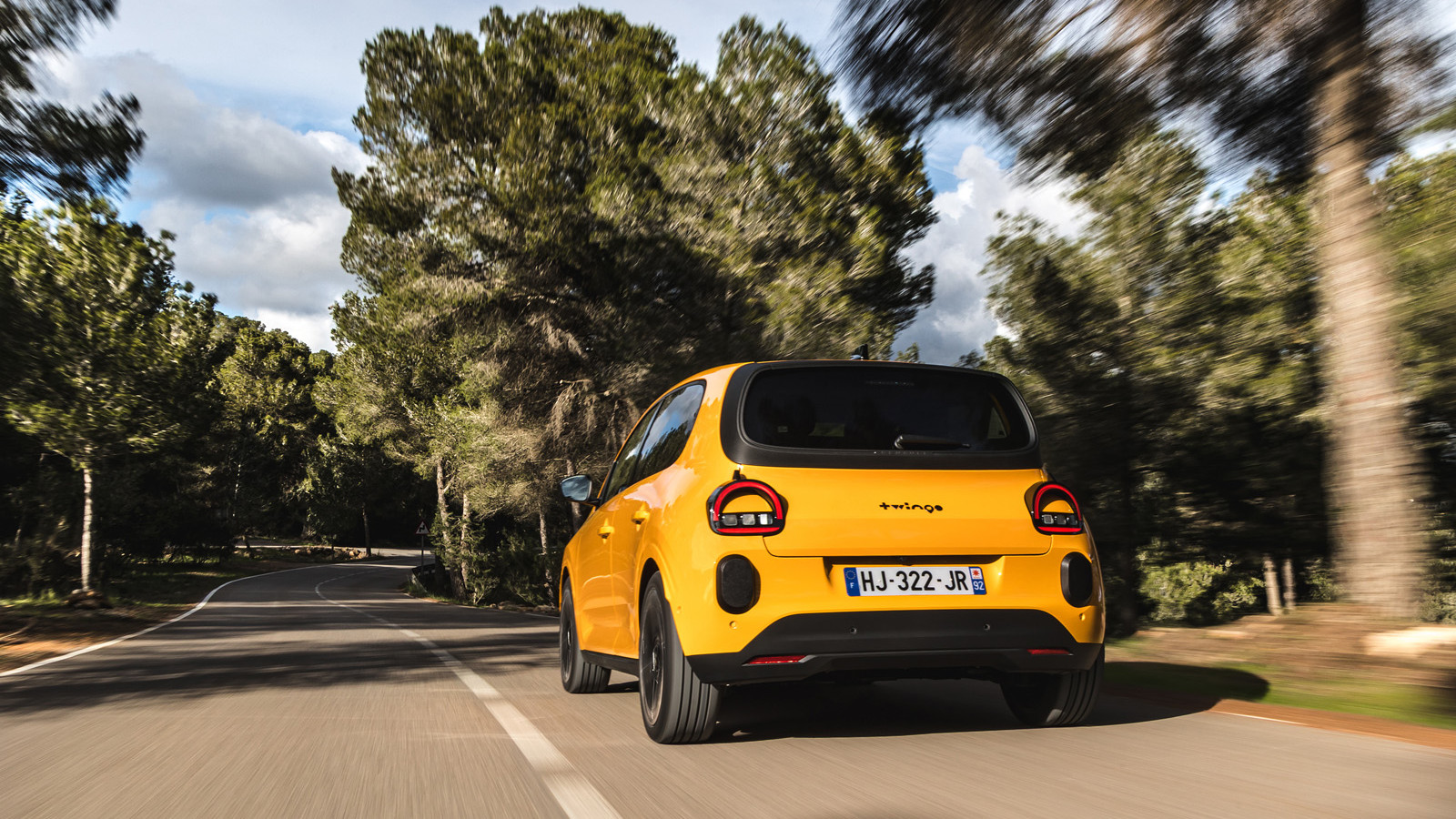
To my eyes – and seemingly to most others – it looks great, with its cheerful face, bold colours, sleek lines with five doors and some neat, practical touches. The rear window’s surround gives it a TV-like pod vibe, while the winglets on the rear light clusters look like a dragon’s scales, and both help cleave air more cleanly from the rear of the car.
But it’s not like that’s unusual. Of the BYD Dolphin Surf, Fiat 500e and Hyundai Inster, only the Inster has a longer range – and it doesn’t start at l4ess than €23,000 (£20,000 / $25,830), as we’re told the Twingo will when it reaches buyers in early 2027.
Between those wheels sits a modestly sized (27.5kWh) battery, albeit a lithium-iron-phosphate one, which saves on cobalt, nickel and cost.
It has a maximum charging speed of 50kW and a WLTP range of 262km (163 miles). That strikes me, as it may you, as not very far, knowing how quickly the Alpine A290 can become a bore in cold weather, so the Twingo won’t be a sensible choice if you ever have ambitions to do long journeys.
Underneath the cute exterior, the new Twingo is largely based on the underlying platform of the Renault 5. Instead of the multi-link rear suspension seen on that car, there’s the torsion beam from the Renault Captur.